Evolution
Teacher Resources

Lesson Guide
No two Big History lessons are the same. Find lesson objectives, pacing, vocabulary, and teaching tips in this guide.
Guide: Teaching Sensitive Topics in Social Studies
Evolution can be a contentious topic for some students and their families. Before diving into this lesson, ensure that you set clear expectations, establish classroom norms, and model thoughtful engagement with your students. For more strategies, check out our one-pager.
Driving Question: How did the evolution of life on Earth increase complexity?
Life first appeared on Earth 3.8 billion years ago, and it’s been evolving ever since. But guess what? Our understanding of evolution has evolved, too!
Learning Objectives:
- Define and explain adaptation and evolution.
- Evaluate how Earth has impacted the characteristics and distribution of life.
- Use evidence to test claims about life on Earth.
Give students a visual queue by zooming in on the origins and evolution of life with the Big History Timeline. Use the deep zoom feature (the + button in the magnifying glass in the top-left corner) to zoom in, or download a printable timeline.
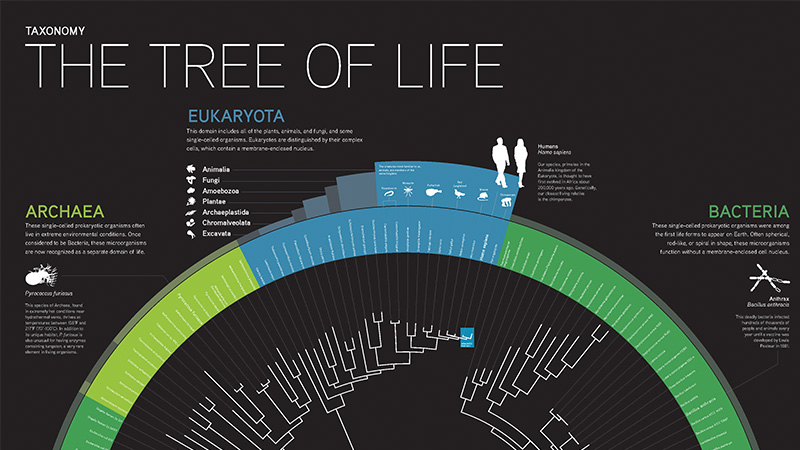
We can imagine all living organisms as branches of an immense tree. But what would that tree look like?



Did you know students can listen to the audio and follow along with the article while they listen? Click the speaker icon in the upper-right corner of the article page to listen. Note that there are audio versions of only the highest Lexile reading level. This is intentional: Best practice points to using the highest difficulty level for audio.
Want to see some different directions teachers have taken the Invent a Species activity? Check out this post as well as this one for the creative species students came up with!
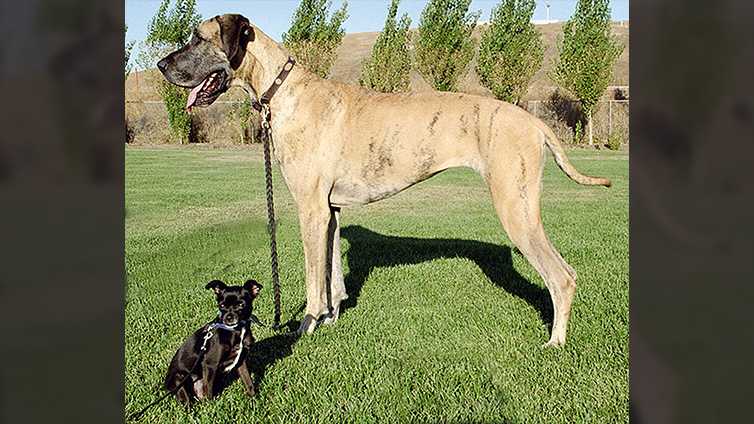
OK, so you know that life evolves in response to the challenges of its environment. We’ll use that knowledge to explore how those adaptations happen, and then it’s time to invent your own species.
-
Guiding Questions

-
Guiding Questions



This activity aligns with Standards 3 and 8 of the National Geography Standards (NGS) and helps students understand how plate tectonics impact ecosystems and the distribution of life on Earth. Explore Big History’s full set of geography resources and see how each activity aligns to the NGS in this alignment and placement doc.
Search for answers as you listen to this podcast clip and use your knowledge to figure out how plate tectonics might hold the key to answering this question.

Help students improve their claim-testing skills by providing feedback using the Claim Testing Feedback Form. Simply cross out the portions of the form that don’t apply to this activity. You could also pair students together to assess each other’s claims and counterclaims using the form.
Put your new evolutionary know-how to work with some good old-fashioned claim testing.



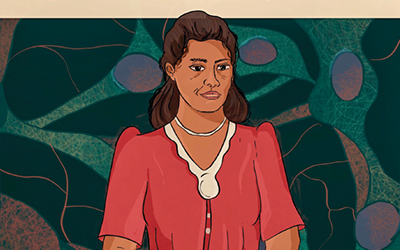
Henrietta Lacks’s immortal cells made incredible contributions to science, but she didn’t receive credit for her role in these discoveries until recently.
-
Guiding Questions