Foraging Societies
Teacher Resources

Lesson Guide
No two Big History lessons are the same. Find lesson objectives, pacing, vocabulary, and teaching tips in this guide.

Claim Testing One-Pager
This one-pager outlines this skill, its importance, and the thinking tools and feedback forms we use in the course. We also have a link to a handy placement doc to see where you can find the other claim-testing activities.
Driving Question: How did early humans live?
Early humans populated the Earth by traveling hundreds of thousands of miles searching for food to gather and hunt. In the process, they used collective learning to improve upon their tools and techniques.
Learning Objectives:
- Describe the characteristics of foraging communities.
- Identify how foraging impacted the diets of hunter-gatherer communities.
Vocab Terms:
Want to spice up the foraging simulation? Head outside your classroom and hide high-value items like candy or homework passes for students to forage. Take a look at this thread in the OER Project Teacher Community for more ideas.
Before we farmed, we foraged. We’re going to give you a taste of the foraging lifestyle with this simulation.


A great way to make learning stick is by showing students pictures that illustrate words or concepts in the article to allow students to visualize what they’re reading about. For example, show students images of present-day foragers or examples of megafauna like mammoths or giant sloths.
Want to see some great student examples of hunter-gatherer menus? Check out this thread in the OER Project Teacher Community.
What would it take to survive as a forager? Complete the survival challenge, then read the article to learn how foraging shaped early human communities. Wrap it all up by using your claim-testing skills to evaluate how early humans lived.


-
Guiding Questions
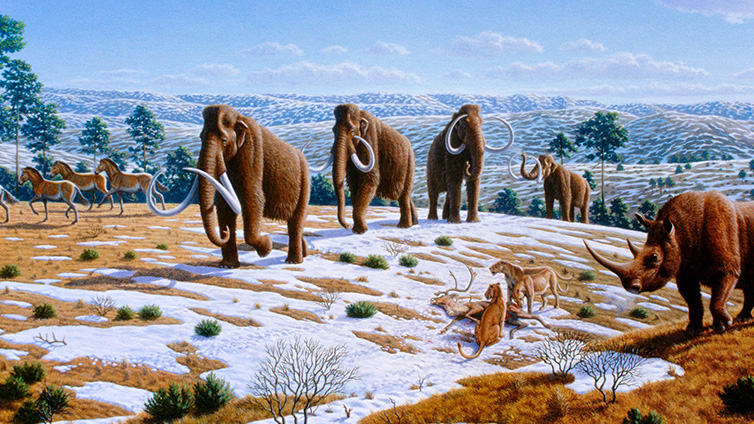


How does your diet compare to that of an ancient hunter-gatherer? Get ready to learn about some surprising similarities (and big differences) between what each of you consumes in this activity and video.

-
Guiding Questions
Another unit down! Well, not quite—time to summarize what you’ve learned so you don’t forget anything important.