The Mongol Empire and the Making of the Modern World
Teacher Resources
Lesson Guide
Hey teachers! The guide has all the essential information for this lesson.
Black Death and Mongols Thematic Map
Help students understand the vastness of the Mongol Empire with this thematic map highlighting Mongol expansion and the Black Death. Remember to use the deep zoom feature by clicking on the + sign in the magnifying glass.
Driving Question: How did the Mongols manage to build and maintain history’s largest land-based empire?
From the steppes of Central Asia came nomadic tribes who would forever change the face of Afro-Eurasia. The Mongols are known for establishing the largest contiguous land empire ever to have existed. Their methods for growing and maintaining their empire differed greatly from the successful empires that came before and after them. Despite their fierce reputations, the Mongols’ empire also brought a prodigious level of stability and security to the Silk Road.
Learning Objectives:
- Explain the process of state building and decline in Eurasia over time.
- Explain how the expansion of empires influenced trade and communication over time.
- Explain the significance of the Mongol Empire in larger patterns of continuity and change.
- Evaluate various sources in order to recognize how history is complicated and enriched by multiple perspectives.
- Use graphic biographies as microhistories to support, extend, or challenge the overarching narratives from this time period.
Vocab Terms:
- empire
- pastoral
- plague
- society
- subjugation
- technology
Don’t skip the World Travelers activity—it’s a student favorite. It also helps students work on their sourcing skills, making it a teacher favorite, too! An OER Project teacher says this activity is a must-do because it “asks students to think critically about texts and support their conclusions with evidence.”
Did you know that Marco Polo, in the years before he invented a hide-and-seek water game, was a world-traveling salesman who brought back many previously unknown goods to a thirsty European market?

Did you know: The Mongol Empire paused its invasion of Europe because of a death in the family? In 1241, Mongol armies were tearing through Eastern Europe; they were basically unstoppable. They had reached as far as Austria when they suddenly turned around. Why? The Great Khan Ögedei had died, and leaders needed to return home to vote on who would be the next Great Khan.
When we think of the Mongols of this period, there’s a temptation to remember them only as destroyers. As students read, have them hold onto both sides of the story: The Mongols built their empire through brutal conquest, but they also created the conditions for greater stability, long-distance trade, and exchange across Afro-Eurasia under the Pax Mongolica.
Imagine conquering 17% of Earth and a quarter of all people on it. Now, imagine controlling it all. That’s exactly what the Mongols did. Find out how, as you make some predictions about what it takes to expand an empire and then explore the Mongol Empire at two different scales.

-
Guiding Questions
-
Before you read
Before you read, you should quickly skim the article, by looking at the headings of each section and the images. Read the questions below as well, so you know what to look for when you read!
While you read
Look for answers to these questions:
- Why was the Mongol Empire important?
- This article approaches the question of why the Mongol conquests succeeded as a murder mystery. What factors contributed to the Mongol Empire’s success?
- How did Mongol rule help increase trade in Afro-Eurasia?
- What role did scholars and technology play in the Mongol Empire?
- Does this article conclude that the Mongols were good or bad?
After you read
Respond to the following questions:
- How does the Mongol Empire represent a significant change from other empires you’ve learned about thus far in the course? What were some of the continuities you noticed between the Mongol Empire and other empires?
- You’ve encountered a diverse tapestry of communities across Afro-Eurasia in this unit. How does the story of the Mongol Empire support, extend, or challenge the narratives you’ve encountered so far?
- The author of this article concludes with a “both sides” view of the legacy of the Mongol Empire. What do you think? Can you take a side? Do you think the Mongols were a positive or negative force for the societies they encountered? What evidence from this article supports your opinion? What challenges it?
-
Guiding Questions
-
Before you read
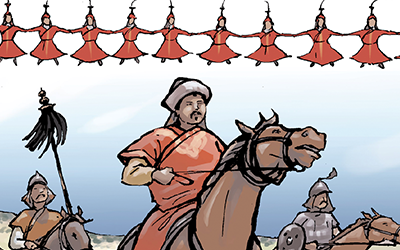
Skim the full comic, paying attention to things like prominent colors, shapes, and types of text and fonts. How do you know where to start and which direction to read? What’s in the gutters (the space between panels)? Who is the focus of the comic? What big questions do you have?
While you read
Look for answers to these questions:
- Who was Sorqoqtani Beki and what was her relationship to the Mongol royal family?
- What was the cause of Sorqoqtani’s conflict with Oghul-Qaimish?
- How and why did Sorqoqtani win this conflict?
- Sorqoqtani’s nephew, Batu, agreed to support her. What did he get in return, and what was the eventual result?
- How does the artist use art and design to demonstrate how competition between women, and their support for each other, helped determine Mongol politics?
After you read
Respond to the following questions:
- To what extent does this article explain the significance of the Mongol Empire in larger patterns of continuity and change?
- How does this biography of Sorqoqtani Beki support, extend, or challenge what you have learned about the Mongols?
This is a good place to remind students that sources about the Mongols are often shaped by fear or political agenda. Use the source collection to show how the Mongol Empire looked depending on where someone stood. Conquered subjects, court historians (like Rashid al-Din), merchants, European visitors, and imperial officials each experienced Mongol rule in very different ways.
Remember that there’s a tool your students can use to help them break down the elements of graphic biographies.
A lot of people wrote a lot of words about the Mongols. You’ll use the Quick-Sourcing Tool to evaluate some of those words and then read two graphic biographies about individuals who encountered the Mongols to help you understand how the Mongols grew so powerful.
-
Guiding Questions
-
Before you read
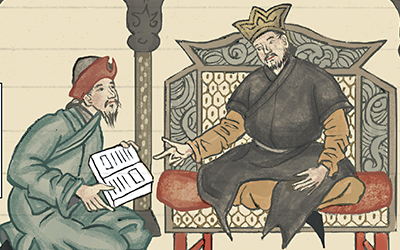
Skim the full comic, paying attention to things like prominent colors, shapes, and types of text and fonts. How do you know where to start and in which direction to read? What’s in the gutters (the space between panels)? Who is the focus of the comic? What big questions do you have?
While you read
Look for answers to these questions:
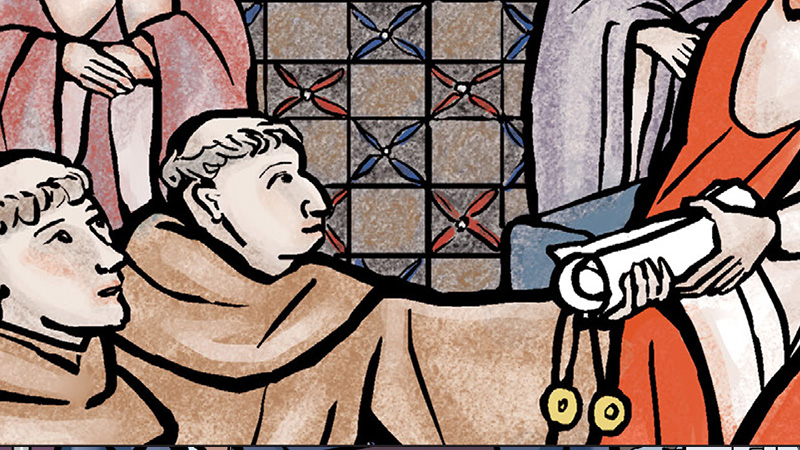
- Why did Pope Innocent IV decide to send a mission to the Mongols?
- How do we know about Pope Innocent IV’s mission?
- How did Güyük Khan respond to Pope Innocent IV?
- Why was Benedict the Pole’s mission important?
- How does the artist use art and design to demonstrate Benedict the Pole’s mission to see Güyük Khan?
After you read
Respond to these questions:
- To what extent does this graphic biography explain the significance of the Mongol Empire in larger patterns of continuity and change?
- How does this biography of Benedict the Pole support, extend, or challenge what you have learned about the Mongol Empire?
-
Guiding Questions
-
Before you read
Skim the full comic, paying attention to things like prominent colors, shapes, and types of text and fonts. How do you know where to start and which direction to read? What’s in the gutters (the space between panels)? Who is the focus of the comic? What big questions do you have?
While you read
Look for answers to these questions:
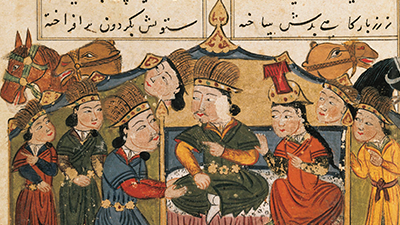
- Who was Rashid al-Din?
- What was the difficulty of ruling the Ilkhanate?
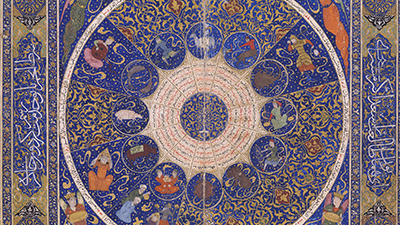
- What does the quote from Rashid al-Din’s book, shown in the top panel, tell us?
- How does the artwork in the Jami’ al-Tawarikh demonstrate the diversity of the Ilkhanate?
- How did the artist of this biography try to demonstrate the connections of the Ilkhanate to other regions in the top panel?
After you read
Respond to the following questions:
- To what extent does this article explain the significance of the Mongol Empire in larger patterns of continuity and change?
- How does this biography of Rashid al-Din support, extend, or challenge what you have learned about connections and networks in Mongol society and in this era?
You’ve learned that conquering and managing the world’s largest empire was no easy task. In this closing activity, you’ll reconsider your earlier opinions.

Thanks to Genghis Khan, the Mongols emerged as a confederation that was successful thanks to, among other things, a willingness toward adaptability.
-
Guiding Questions
-
Before you watch
Preview the questions below, and then review the transcript.
While you watch
Look for answers to these questions:
- How did Mongol migratory patterns affect their production and distribution?
- Why, according to John Green, were Mongols generally more egalitarian than many other societies?
- Which policies did Genghis Khan use to unite the Mongol confederation?
- How did adaptability help the Mongols build their empire? Please give at least two examples.
- How did the Mongol Empire affect trade and exchange across Eurasia (and even parts of Africa)?
- What was the Yam System?
- How did the Mongols recruit people to work for them? What world-historical effect did this have?
- What did the Mongols have to do with the Black Death?
After you watch
Respond to the following questions:
- Describe the extent to which this video explains how the expansion of empires influenced trade and communication over time.
- How would you describe the role the Mongols played in Afro-Eurasian trade between about 1200 and 1350?
- How does evidence from this video contest, support, or extend the governance theme narrative you have been given?
The Mongols started off as small, nomadic pastoral communities. United as an empire by Genghis Khan, they swiftly expanded and energized Eurasian trade and exchange.