Trans-Saharan Trade Routes


Driving Question: What factors fueled the expansion of trans-Saharan trade, and how did its growth reshape African societies?
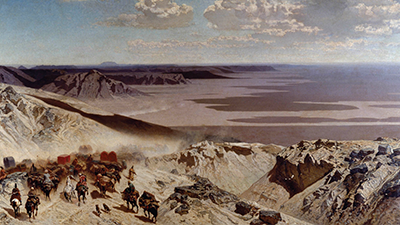
From 1200 to 1450 CE, an extensive network of trade routes, merchants, and pastoralists connected the communities within and surrounding the Sahara Desert. Pastoralists mastered camel riding, allowing them to create trading caravans to transport goods from West Africa to the Mediterranean. Salt, gold, and enslaved people were all transported along these routes. This trade also further encouraged the spread of technology and Islam through the region.
Learning Objectives:
- Explain the causes and effects of the growth of trans-Saharan trade.
- Examine the intellectual, cultural, and environmental effects of networks of exchange such as the Trans-Saharan trade network.
Vocab Terms:
Show off your knowledge of both trade networks and PIECES to make predictions about this lesson.


Mix up the reading strategy for this article by having students create the guiding questions and sample answers. Then, they can exchange their work and answer each other’s questions.
Imagine having to cross a desert to do business. What are some of the obstacles you might face? They might be similar to the challenges of people circa 1200!
-
Guiding Questions

This SAQ activity, which focuses on the political, cultural, and technological factors that impacted Indian Ocean trade, helps students build the skills they’ll need to answer these types of questions on the AP exam.
Want to inject some fun into this activity? Play musical chairs! Have students work as a team to answer the SAQ prompt. As students rotate, they can pick up where the last person left off.
You may remember “ACE-ing” your previous SAQ! Here is another opportunity to ACE another AP exam question!

Have student groups evaluate their completed Comparison Tools and thesis statements using the Comparison Feedback Form. They’ll identify the areas in which they excelled and those for which they might need help. Have groups turn in their feedback forms as an exit ticket to help you adjust your teaching strategies for the next comparison activity.
Ever wonder how your online shopping habits connect to history? Compare trade networks to see how people moved goods and ideas and how they laid the groundwork for today’s global economy.
By using AI to help them revise their claims and counterclaims, students can learn how to improve their writing skills— and you’ll be spared from grading a formative assessment. Have students share with a partner or the class their original claims and counterclaims, the revisions that the AI agent suggested, and their evaluation of how they think the AI agent helped them to revise.
To prove a point, you have to have a point! This exercise helps you develop claims that you will then prove!