Rationales for Imperialism from 1750 to 1900 CE

Driving Question: How did industrialized nations justify global state expansion?
Imperialism was about more than just land acquisition. Ideas like racial superiority, national pride, and religious conversion played a huge role in imperialist expansion. Explore how industrialized countries used various rationales for their imperialist practices.
Learning Objectives:
- Explain how ideology contributed to the development of imperialism from 1750 to 1900.
- Use the historical thinking skill of sourcing to evaluate differing perspectives on imperialism.
Vocab Terms:
This activity has students compare two political maps. Have them go deeper by investigating how industrial imperialism impacted different regions of the world by zooming in on the Industrialization and Imperialism Thematic Map.
As nations industrialized, their desire to expand grew. What did this growth look like?


Imperialism has been around forever—so what makes imperialism during the late nineteenth century “new”?
-
Guiding Questions
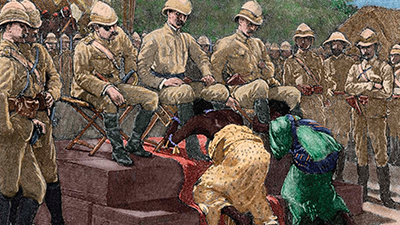

Want to expand the discussion of imperialism outside of Europe? Swap out the excerpts in this sourcing activity with Documents 5 and 6 of the Source Collection: Indigenous Responses to State Expansion, which provide differing perspectives on the Filipino independence movement and American imperialism.
Looking at things from different viewpoints allows us to understand a concept more fully, and the best place to find those viewpoints is to go to their sources.


While you already know some of the impacts of “new” imperialism, make predictions about additional impacts, both on the colonizing powers and the colonized people and communities.