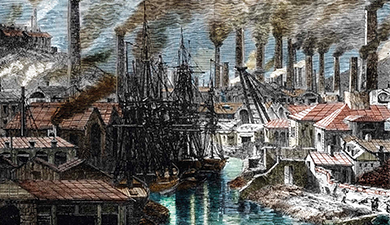
Origins of the Industrial Revolution


Driving Question: What caused the Industrial Revolution?
The Industrial Revolution brought massive changes to all aspects of society. But what caused these enormous changes? And why did the Industrial Revolution start where it did? Explore the geographic, social, economic, and environmental factors that helped tiny Britain jump-start an industrialization phenomenon that would alter the world.
Learning Objectives:
- Analyze the features of Britain that helped it industrialize first.
- Evaluate how the Industrial Revolution changed human communities and societies during this era.
- Use claim testing to evaluate the Industrial Revolution.
Did you know: The world’s first traffic light was installed in London in 1868. It included gas lamps and was operated manually by a police officer. It was removed after it exploded and killed the operator. So, remind your students that the next time they’re stuck at a red light, they should be thankful that at least they don’t explode anymore.
Unlike those who lived through the Industrial Revolution, you do get to choose. In this activity, explore different options to get a feel for what life was really like back then.


Note: The Urbanization Game is intended to be a teacher-led, collaborative activity. If you’re pressed for time, students can easily complete this activity on their own or with a partner.
Be sure to refer to the Lesson Guide. There, you’ll find links to download the Game Narratives and a Game Template. You’ll also need large sheets of paper and black markers for this activity.
The Urbanization Game is an OER Project teacher favorite. One teacher discusses a recent OER Urban Game redesign, while others discuss the urban game genre more generally in these community posts.
Industrialization transformed communities in major ways. This simulation lets you experience both the benefits and challenges of that rapid growth.


This is a good place to push past the oversimple “Britain had coal” explanation for industrialization. You may want to keep a running list of factors (coal, wages, labor pool, wool, finance, empire, geography, for example) so students see industrialization as a convergence of conditions. Truly the right place at the right time.
Where did industrialization begin? Explore some of the factors—both within and outside Britain’s borders—that gave this county an advantage.
-
Guiding Questions
Make sure students are using metacognitive strategies: Before they start reading, remind students to monitor their thinking as they go. They should stop at the end of a sentence (or paragraph) and ask themselves such questions as:
- What did I just read?
- Do I understand what I just read?
- How does what I read relate to the overall topic?
Continue to explore the surprisingly complicated question of why industrialization began in Britain while you also expand your claim-testing skills.
-
Guiding Questions

Reflect on what you learned in this lesson with a quick summary. Here’s the trick: You have to summarize what you know using an image, a sentence, and a word!



Providing solid evidence and analyzing it is crucial for building a strong written argument. Look for these elements in a sample student essay.

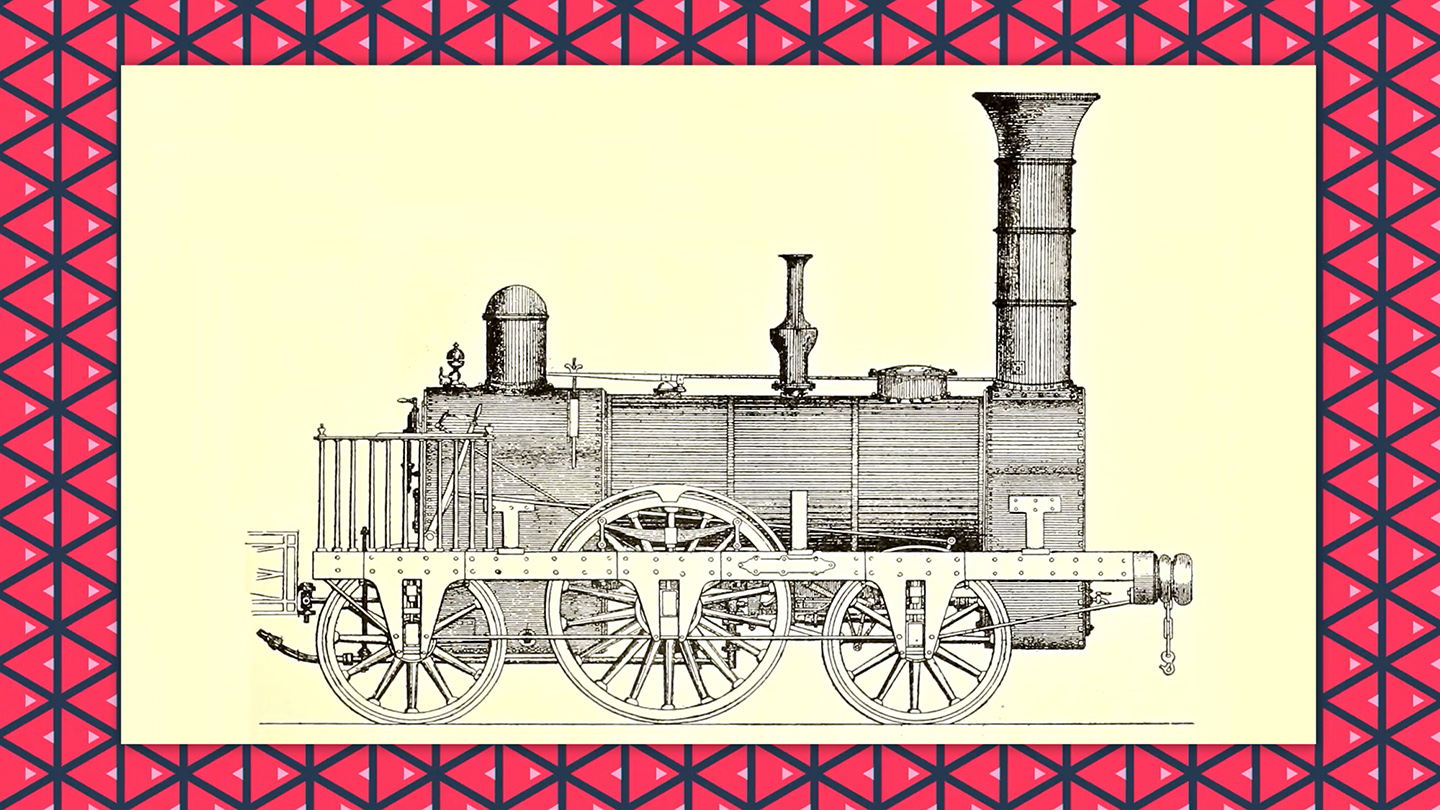
Coal helped propel England to the forefront of industrialization. It also propelled the steam engine. This article will help you understand how and where the Industrial Revolution started.
-
Guiding Questions