
Human Ancestors
Teacher Resources

Lesson Guide
For teaching tips, vocabulary, timing, and sample answers, check out this guide.
Guide: Teaching Sensitive Topics in Social Studies
Evolution can be a contentious topic for some students and their families. Before diving into human evolution, ensure that you set clear expectations, establish classroom norms, and model thoughtful engagement with your students. For more strategies, check out this guide.
Driving Question: How did early humans evolve on Earth?
Hundreds of thousands of years ago, multiple human species lived on Earth at the same time. Did all these species die out, leaving our species, Homo sapiens, to roam the Earth alone? Or do we carry some of these species with us?
Learning Objectives:
- Use evidence to explain human evolution.
- Describe how early humans lived.
Encourage students to do their best to organize the images from our earliest ancestors to Homo sapiens. Making predictions is a key part of the learning process. Having students share out their predictions will help generate an active discussion about connections we have to our early ancestors.
Our ancestors took millions of years to evolve into modern humans. How many of these early ancestors can you identify?


Check out some middle-school Evolution Comic exemplars in this community post to see the stories students created.
Every moment in nature is a test. This slideshow and activity walk you through how (and maybe why) our ancestors evolved the way they did.
Human Evolution




Learning about our varied human ancestors and how we evolved can be challenging for some students. This article has multiple Lexile levels and an audio version to help support student learning and literacy. Choose different Lexile levels using the Version drop-down menu in the upper-left corner of the article, and access the audio by clicking on the speaker icon in the upper-right corner.
As humans evolved, our brains got bigger, and a bigger brain means more room for complexity. As you read, think about whether our evolutionary journey is complete.
-
Guiding Questions
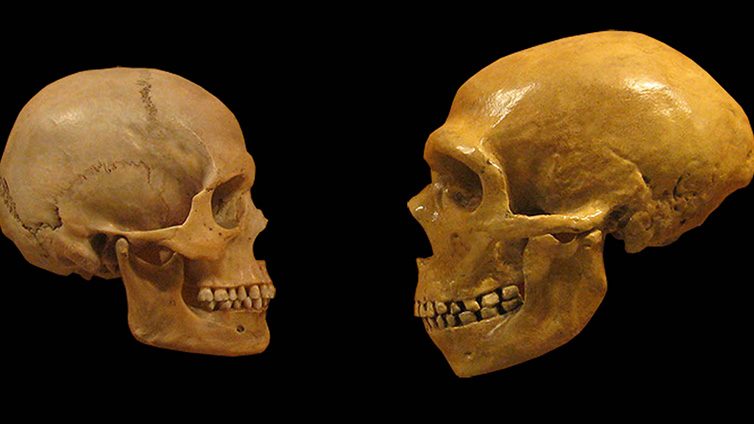


Want a fun way for students to remember the key elements of human evolution? Have them rewrite the song “Head, Shoulders, Knees, and Toes” using what they’ve learned. Check out this example that was shared in the teacher community:
“Heads got bigger with their brains, with big brains
Hands evolved to grasp tools, not climb trees
Legs changed so we can walk, walk upright
And eyes improved to scan for danger, look what’s that!”
Ever hear the phrase, “I wish I knew then what I know now?” Well, here’s your chance to share what you know with someone from the distant past…or future!



You can choose a different clip about human origins from Episode 3 of the Unknowns with David Christian podcast. For example, if you want students to listen to David and Michael Archer discuss the origins of collective learning and early human language, have students listen from 13:02 to 17:06 of the full episode. Just head to the podcast playlist on our YouTube channel.
There are still some mysteries surrounding our human origins. Explore what we do and don’t know in this podcast clip.
-
Guiding Questions
How are modern humans linked to other extinct species of humans?
