Decarbonization Solutions

Driving Question: How can we reduce emissions?
There are numerous solutions to reduce emissions in each of the Grand Challenges, but not all solutions are equal when it comes to avoiding the worst impacts of climate change. How will decision-makers in different communities and countries know where to focus energy, time, and resources? This lesson explores how we can evaluate solutions to maximize their impact and what we can do to get them into widespread use.
Learning Objectives:
- Evaluate decarbonization strategies.
- Identify the solutions most valuable to emissions reduction.
- Research a decarbonization strategy and advocate for its implementation.
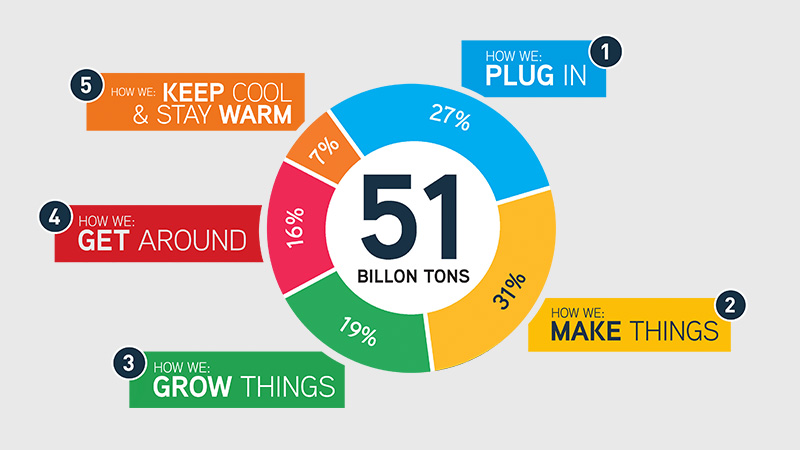
What are the solutions for reducing emissions? These images will help you think about the most promising decarbonization strategies.


Divide a reading into chunks, either by paragraph or section. After they’ve read each chunk, have students write a one-sentence summary of what they read. For even more support, incorporate guiding questions into the article so that students know where to look for the answers.
There are lots of options out there that might help decarbonize. How do we determine which ones are worth our time and resources? Read the article to learn more, and then use the activity to decide for yourself.
-
Guiding Questions



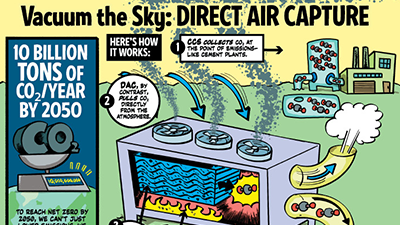
Carbon-capture technology evolves rapidly, so consider giving students time to research recent developments before completing their evaluation.
Expensive, complex, and…necessary? Use the infographic to explore for yourself the pros and cons of carbon capture, and then synthesize your thinking as you work through the activity.
-
Guiding Questions


Electricity makes our modern lives possible. How did we get to where we are now, and what might the future hold?

This activity asks students to independently research a decarbonization solution. The Grand Challenge Research Library can serve as a helpful source for topic ideas and a starting point for their research.
Dive deep into a single decarbonization solution. Could it be what we need to make a true impact solving climate change?

This closer is an opportunity for informal writing. For tips on using informal writing in the classroom, see page 2 of the Writing Guide.
You’ve learned all about the Grand Challenges and their solutions. Now you make the call: Which ones are the most important?


This activity can serve as a formal assessment in multiple formats, including a document-based question (DBQ), a guided writing assignment, or homework. It can also be adapted into a debate-style activity.
Students are asked to evaluate the impact of one of three climate solutions—nuclear energy, tree-planting, or plant-based meat. The activity has them build on concepts from the lesson, although it can also stand alone. To develop a strong argument, students will need dedicated time for independent research.
This writing assessment is an opportunity for you to showcase what you’ve learned in this unit by analyzing documents and creating an argument about the solutions needed to reduce emissions.