Understanding Climate Change
Driving Question: What is climate change?
There’s no simple definition for climate change. But to overcome it, we have to understand it. Explore what climate change is, and think about how it impacts you—and the entire world.
Learning Objectives:
- Define climate change.
- Explain the main causes of climate change.
- Analyze historical data and trends that demonstrate climate change over time.
- Apply claim-testing skills to evaluate data and people’s perceptions about climate change.
Vocab Terms:
- climate change
- fossil fuel
- greenhouse gases
- parts per million (ppm)
- temperature anomaly
Opener: Understanding Climate Change
What do you know about climate change? Develop your own definition and perspective.

What Do We Mean When We Talk About Climate Change?
Heads up: You can turn on captions, slow down the speed of the video, and have students follow along by reading the video transcript. For more video tips, check out the OER Project Video Guide.
Climate change has been around for 4.5 billion years. What’s so special about it now? Watch the video to explore what’s different about today’s climate change, then come up with a working definition of the term as you work through the activity.
-
Guiding Questions
-
Before you watch
Preview the questions below, and then review the transcript.
While you watch
Look for answers to these questions:
- What contribution did Eunice Foote make to understanding climate change?
- What is the greenhouse effect?
- What has caused the change in Earth’s average temperature in the last 200 years?
- What’s the difference between weather and climate?
- What are some impacts of climate change mentioned in this video?
After you watch
Respond to this question: What types of communities or people do you think are most vulnerable to the types of climate change impacts talked about in this video?
Parts Per Million
The numbers tell a story—but is it the right one?
-
Guiding Questions
-
Before you read
Preview the questions below, and then skim the full infographic, paying attention to things like prominent colors, numbers, charts, and types of text. How do you know where to start and in which direction to read? How do you know which numbers are most important? What concept is the focus of the graphic?
While you read
Look for answers to these questions:
- What does PPM stand for? How does PPM relate to climate change?
- Why does this infographic mention caffeine? How does it relate to climate change?
- According to this infographic, how have carbon dioxide concentrations in Earth’s atmosphere changed over the last 800,000 years?
- What is the greenhouse effect? How has it changed since 1750?
After you read
Respond to this question: How does the title of the infographic relate to climate change?
Fact or Fiction?
Claim testing is OER Project’s approach for assessing the quality and veracity of claims—an essential skill when building digital literacy. This is the first of many claim-testing activities that appear throughout the course.
Are they liars or just uninformed? People are getting way too good at presenting opinion as fact. Luckily, claim testers help us get to the bottom of just about anything.

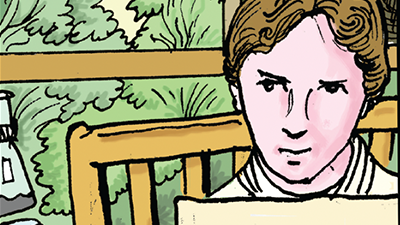
The Climate Pioneer
Did you know Eunice Foote was the first to describe the greenhouse effect? (Spoiler: A male scientist got the credit.) Graphic bios like these bring overlooked and forgotten stories to light.
Learn more about Eunice Foote and her impact on our understanding of climate change in this blog post.
Meet the scientific pioneer who was the first to describe the greenhouse effect. Did she get the credit she deserves?
-
Guiding Questions
-
Before you read
Preview the questions below, and then skim the comic, paying attention to things like prominent colors, shapes, and types of text and fonts. How do you know where to start and in which direction to read? What’s in the gutters (the space between panels)? Who or what is the focus of the comic?
While you read
Look for answers to these questions:
- What was remarkable about Eunice Foote’s early life?
- What contributions did Eunice Foote make beyond science?
- What was Foote’s big discovery?
- What happened to Eunice Foote’s work after she conducted the experiment?
- How does the page's design, text, and illustrations contribute to your understanding of Eunice’s story?
After you read
Respond to this question: Did Eunice Foote’s experiment contribute to our understanding of climate science? Provide one piece of evidence in favor and one piece of evidence against.
The Evidence of Climate Change
Don’t forget: You can find key ideas and sample answers to these materials—and all articles, videos, and activities—in the Lesson Guide found at the top of the page.
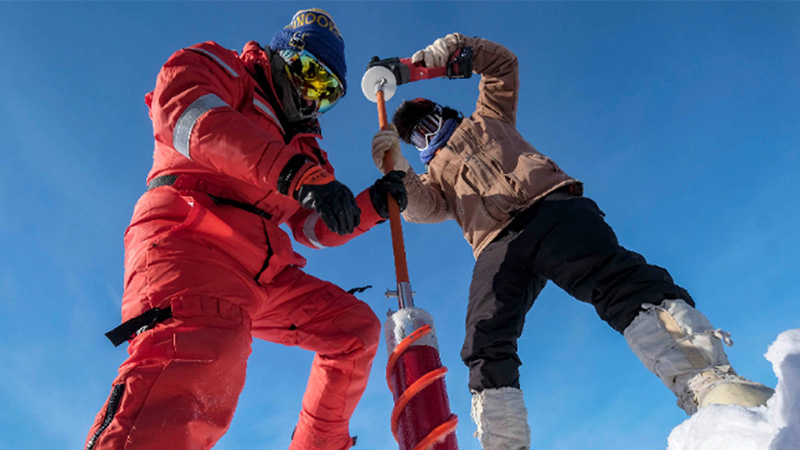
How do we know climate change is happening? Dive into the charts in the article to find the evidence, then put the claims to the test in the activity that follows.
-
Guiding Questions
-
Before you read
Preview the questions below, and then skim the article. Be sure to look at the section headings and any images.
While you read
Look for answers to these questions:
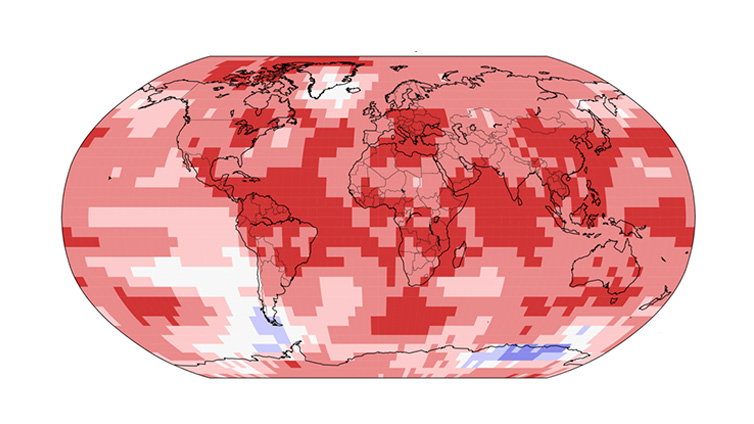
- According to Chart 1, how have global temperatures changed over the last 150 years?
- Why is carbon dioxide (CO2) a problem for climate change?
- When and why did human emissions of carbon dioxide begin increasing?
- What evidence does Chart 3 provide to show that human-related emissions of carbon dioxide are significant?
- According to Chart 4, what do we learn when we compare global temperature anomaly and CO2 concentrations in Earth’s atmosphere?
After you read
Respond to this question: What are some other types of evidence you can think of that would help us see the reality of climate change?
Current Events
Created in partnership with Heatmap News, this newsletter will help you cut through the noise of social media and headlines and focus on what matters most.
Check out the check-for-understanding questions on page 4: perfect for a Kahoot-style trivia game.
Browse past editions here for ready-to-go activities for that extra half hour on Friday.
Climate is in the news daily—but what really matters? Check out the most important current events to stay in the know.
Closer: Understanding Climate Change
It’s time to make a claim—but be prepared to defend it.