The Cost of Decarbonizing

Driving Question: How can we manage the costs of decarbonization?
How much will consumers be willing to pay for low- or no-carbon alternatives? Examining the “green premium”—the extra cost for low-carbon products—can be a valuable way to evaluate climate solutions and guide efforts to maximize impact.
Learning Objectives:
- Define the term green premium.
- Explain the relationship between green premiums and behavior, policy, and innovation.


How much is a plant-based burger worth? The article, infographic, and video in this lesson offer different takes on the concept of the green premium. If you’re short on time, choose one and jump straight to The Cost of Decarbonizing (3.5.4).
Why talk about money when we talk about climate change? Explore why costs matter when it comes to addressing climate change.
-
Guiding Questions
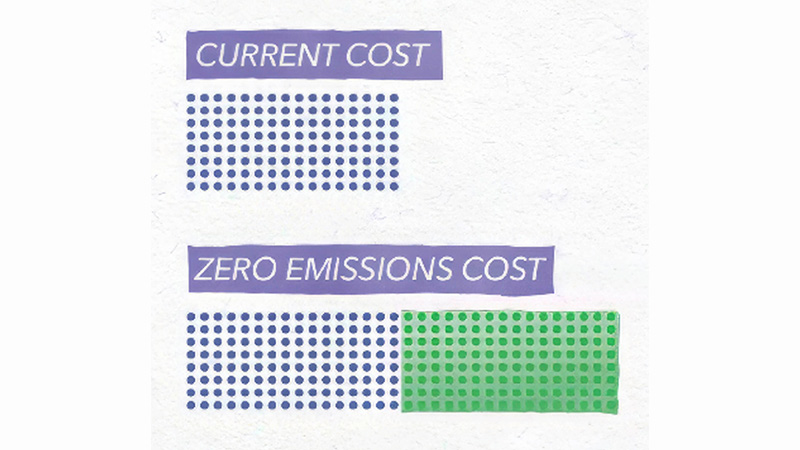

How can the green premium help decide what solutions to focus on? Explore how the concept can inform actions of government, businesses, and individuals.
-
Guiding Questions
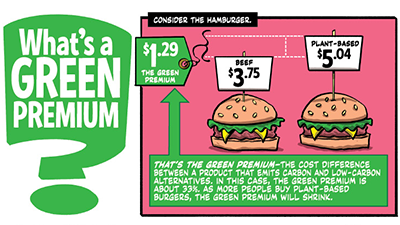

The green premium is a tool for understanding the cost of implementing climate solutions. Watch the video to explore how the green premium can help us determine where to focus our efforts, and then investigate the problem further in the activity.
-
Guiding Questions



What are the policies in place to make climate solutions more accessible? Explore one government policy to see what’s working, and what’s not.

How can we drive demand for low- or zero-carbon technologies? It’s up to you to see if you can make a strong case.


This is an opportunity for formal assessment and can be used as a document-based question (DBQ) assessment, a guided writing exercise, or homework.
The DBQ is based on the materials from Unit 3. While you needn’t have taught the entire unit to assign it, students will be most successful if they’ve completed Lesson 3.3: The Need for Climate Innovation.
This writing assessment is an opportunity for you to showcase what you’ve learned in this unit by analyzing documents and creating an argument in response to a prompt.