
Unit 2 Overview

Driving Question: How did networks of exchange connect societies, and how were communities changed by these connections?
Why start a world history course in 1200 CE? This lesson provides important historical context for how the world was organized before it became globally connected. Learning about the variety of communities and networks that existed from 1200 to 1450 CE will also allow you to make historical comparisons across time and geographic space.
Learning Objectives:
- Identify the major similarities and differences in how communities were organized from 1200 to 1450 CE.
- Explain how communities interacted through regional networks from 1200 to 1450 CE.
- Identify the major changes and continuities in the three frames from 1200 to 1450 CE.
Did you know: Medieval scribes in Europe sometimes filled otherwise-serious manuscripts with killer rabbits, sword-fighting snails, and other bits of fantasy. Even during the so-called Dark Ages, bored students were doodling weird stuff in the margins. Check out who wins in the epic battle of Knight v. Snail at the British Library.
What can a map with some circles tell you about the world in the thirteenth century? Put your hypothesis skills to the test!


No more awkward Bueller-esq classroom silences. Unit Notebooks liven things up. These notebooks appear in the first and last lesson of every unit, and they ask students to respond to—sometimes controversial—statements and questions. These are opportunities for students to track their learning and see how their thinking changes. Use this routine to get the thinking juices flowing and help discussions feel less…Bueller? Bueller?
Agree or disagree? Evaluate some statements before you dive into Unit 2—then see how accurate you were when you get to the end of the unit.

Every reading in this course is accompanied by guiding questions in a routine called Three-Step Reading. Students 1) skim for orientation; 2) read for understanding; and 3) connect to what they’re learning.
You’ll find sample answers for the guiding questions in every Lesson Guide. For more information on Three-Step Reading, you can check out pages 2–3 of the Reading Guide.
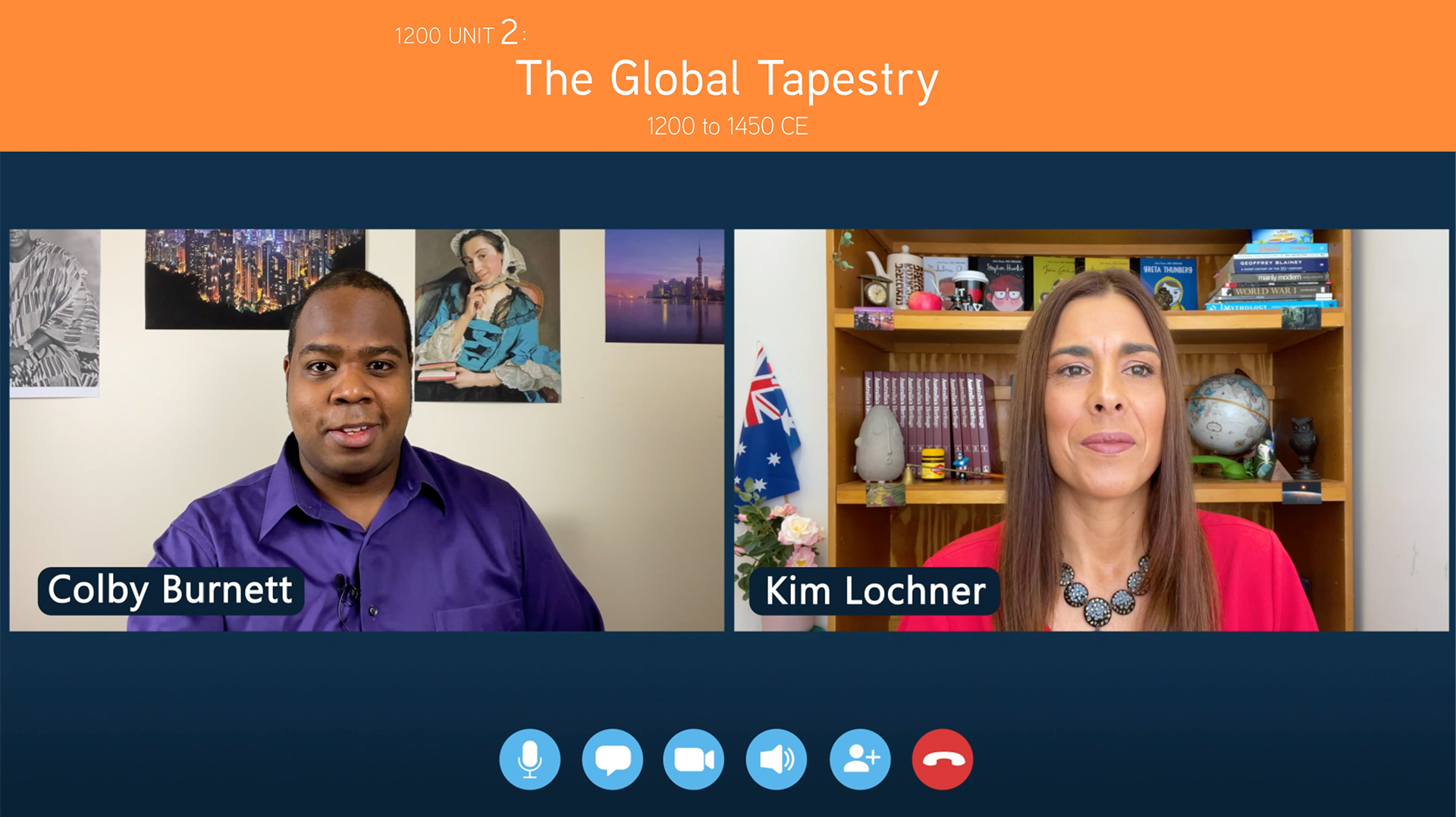
We accept our various global connections as part of our everyday lives. But exactly what were the origins of these ties that bind us? The video and article below will give you a glimpse into how the world was organized from c. 1200 to 1450 CE.
-
Guiding Questions
-
Guiding Questions
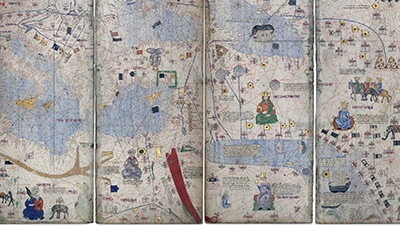

World History: 1200 uses three frames to help students make sense of the vastness of world history: communities, networks, and production and distribution. In the first lesson of every unit, students will find a paired frames-related video and activity, like this one.
Looking for some new classroom decor? Check out our frames posters. Illustrated by renowned artist and activist Shepard Fairey, these three posters will look great in your classroom and have the added bonus of helping students remember the frames.
Interesting things happen when people from diverse cultures and regions get together. This lesson examines how developments such as new trade routes changed the lives of so many.
-
Guiding Questions
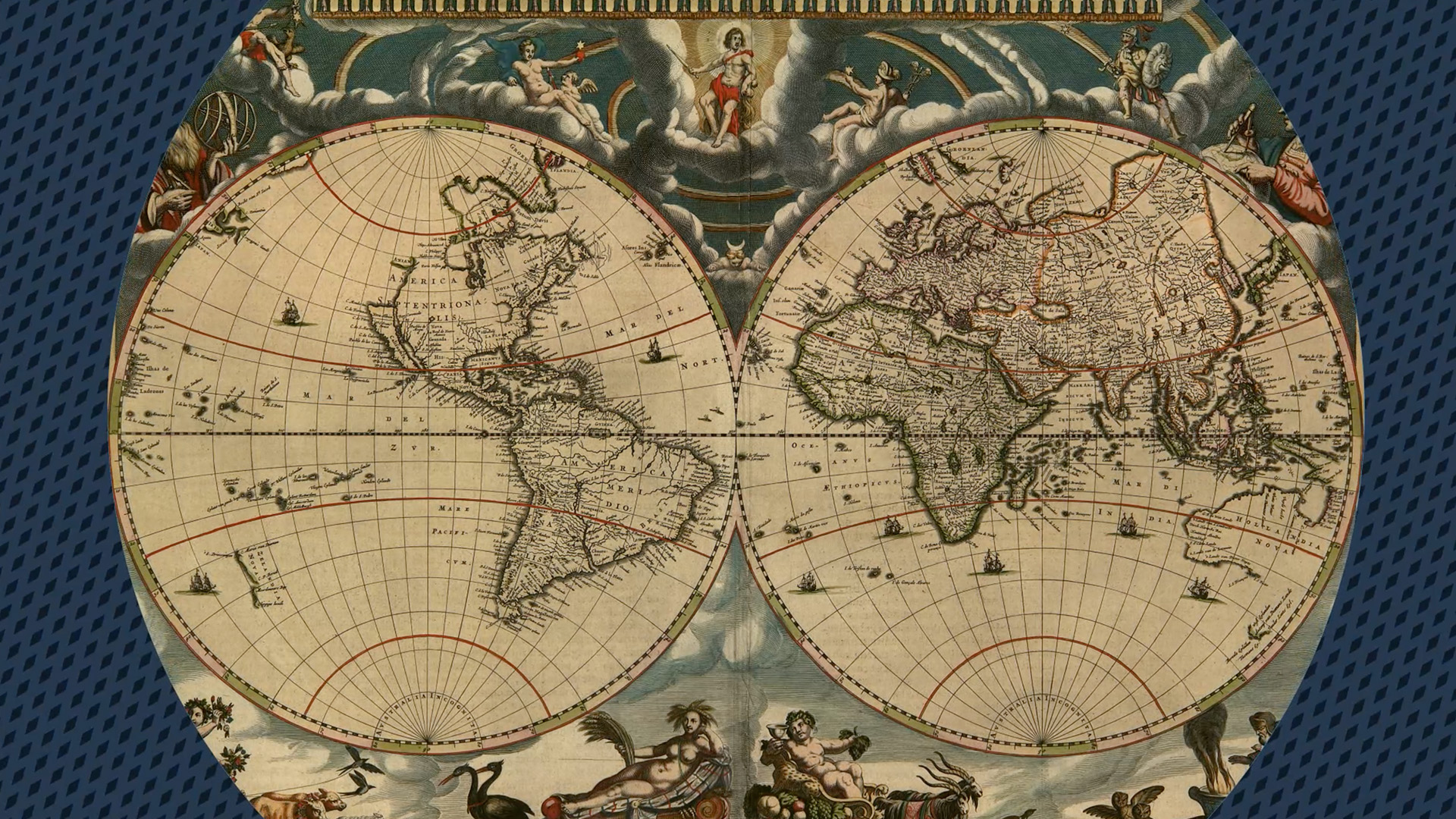

A lot of new information has been presented over the course of this lesson! How would you summarize it?


Practice claim writing while reviewing what you’ve learned by building a claim about trade networks.