The Global Cold War

Driving Question: How did sociopolitical differences between the Soviet Union and the United States affect the world?
From Vietnam to Afghanistan, Chile to Cuba, the Cold War was a global struggle. As the United States and Soviet Union battled for influence, they reshaped global politics and communities far beyond their borders.
Learning Objectives:
- Use evidence to understand how the Cold War spread around the world.
- Practice quick sourcing to evaluate how different individuals and nations responded to Cold War pressures.
- Use the historical thinking practice of CCOT to evaluate the continuities and changes from the Second World War to the Cold War.
Vocab Terms:
The Cold War was about many other nations besides the two superpowers. As you get ready to tour the global Cold War, consider the perspective of a smaller nation.


If you’re running Who Is “Winning” the Cold War as a full-class activity, you’ll need two colors of sticky notes or paper and tape.
Before you begin class, you should draw a large timeline on the board with the dates included in the activity.
You can turn Who Is “Winning” the Cold War? into a card game! Read this thread on the Community Forum and download this OER Project teacher’s card game!
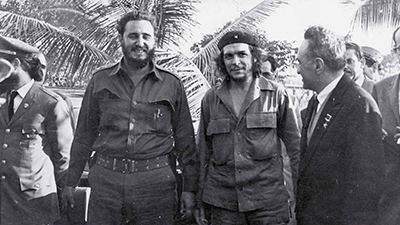
Cold War rivalries played out in many different regions. These materials examine how local conflicts in Asia, Africa, and Latin America were shaped by global alliances, ideologies, and power struggles.
-
Guiding Questions


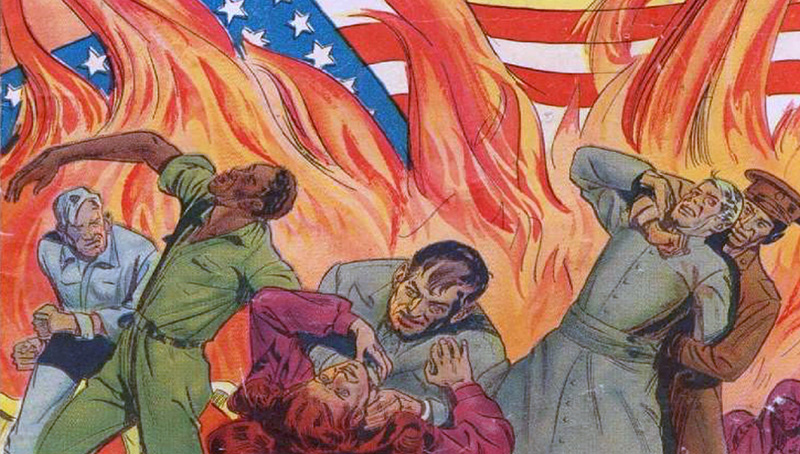
Provide sentence starters: Provide the words and phrases students might use to start off a paragraph or sentence. Consider posting these prominently in your classroom. Some examples are:
- This essay discusses...
- In this essay/paper...
- Emphasized are...
- For instance...
- Rather...
- In contrast to...
- Eventually...
- Finally...
- As a result of...
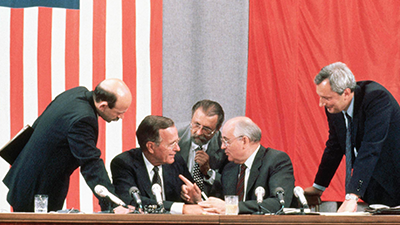
The Cold War didn’t end with a final battle, but with big changes inside the Soviet Union. Trace how communism collapsed and reflect on how the world shifted from the end of World War II until the fall of the USSR.
-
Guiding Questions
In this lesson, you’ve seen the many ways that the Cold War and decolonization were entangled. Use this closer activity to start pulling the threads apart.