
Unit 3: Transoceanic Connections
Unit 3 explores how belief systems, states, and exchange shaped Afro-Eurasia from c. 1200 to 1450 CE. It shows how agrarian states expanded, how rulers gained and kept power, and how migration and trade reshaped societies. Students examine the spread of technology, the role of religion, and the rise and fall of empires. Articles and videos connect Mongol rule, state growth, and exchange networks to political, economic, and cultural change.
- The unit examines how agrarian states changed as political systems evolved and empires expanded in an interconnected world.
- The learning objectives focus on belief systems, state formation, exchange networks, and their technological and environmental effects.
- The unit investigates how rulers legitimated, consolidated, and maintained power through innovations and continuities in governance.
- The unit emphasizes that migration and exchange transformed the economics, politics, and culture of Afro-Eurasia.
- Teaching tools connect religions, Mongol rule, state growth, and trade networks to major Afro-Eurasian developments before 1450.
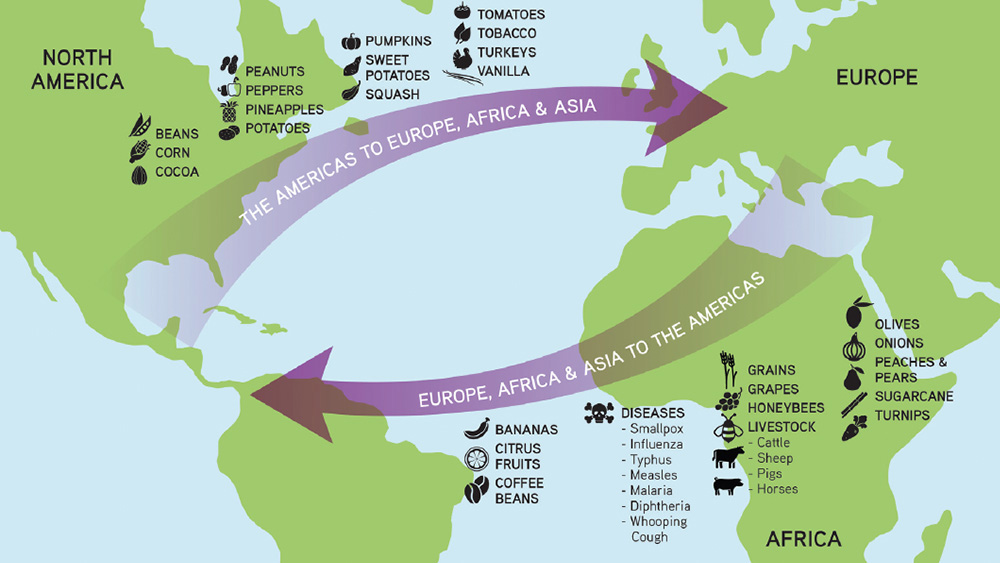
After 1492, transoceanic voyages linked the hemispheres in sustained connection for the first time, setting the stage for an exchange that forever changed lives in the Old World and the New.
Early Modern Empires
Lesson 3.2
Lesson 3.3
European Empires in the Americas
Lesson 3.4
Lesson 3.5
Lesson 3.6
The First Global Economy
Lesson 3.7
Lesson 3.8
Lesson 3.9
Lesson 3.10
 Teaching This Unit

Unit 3 Vocab
Key Unit 3 vocabulary words and definitions.

Three-Step Reading Worksheet
Analyze text at three different levels to develop a deeper understanding.

Reading Overview
Reading strategies to help students dig into a variety of texts.
Historical Thinking Skills Guide
Develop the skills needed to analyze history and think like a historian.
Assessment Guide
Learn about OER Project’s approach to assessment.
Unit 3 Teaching Guide
All the lesson guides you need in one place.