Why Do Empires Collapse?

Driving Question: What are the most important factors leading to the collapse of empires?
Empires always fall—but how and why depends on leaders’ choices and the challenges they face. By comparing different collapses, we can uncover the biggest causes of chaos and see what they reveal about the past, the present, and the future.
Learning Objectives:
- Analyze historical narratives of collapse and evaluate how they might shape our understanding of today’s societies.
- Evaluate the legacy and collapse of the Han Dynasty and Roman Empire.
- Use the historical thinking practice of causation to understand how and why societies collapse.
Vocab Terms:
This lesson is all about causation. If you need a refresher, check out OER Project’s causation one-page guide. It provides a quick overview of the Causation Tool, associated Feedback Form, and some great teaching tips.
Just as societies rise, they also fall. In this activity, you’ll preview how some of these stories of collapse begin.


The Collapse Categories activity uses two concepts from the “Empires Fall” article that help evaluate the relative health of empires: cost and cohesion:
- Cost refers to the resource burden of maintaining an empire, which becomes harder to sustain over time.
- Cohesion refers to the sense of unity holding the empire together, which weakens as elites and other groups begin to care more about their own interests than the whole of the empire.
If you need more guidance, you can check out the Lesson Guide, which provides sample answers.
How do empires collapse? Invasion, lack of money, and internal challenges are three major reasons, as many ancient empires discovered.
-
Guiding Questions
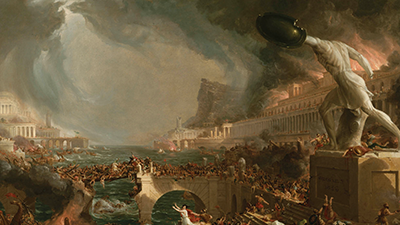



Autopsy of an Empire is intended to be a teacher-led, collaborative activity. However, if you’re pressed for time, students can easily complete this activity independently or with a partner.
Check out this conversation in the OER Project Community Forum, where teachers offer online form-fillable versions of this activity along with advice about how teach this in the classroom.
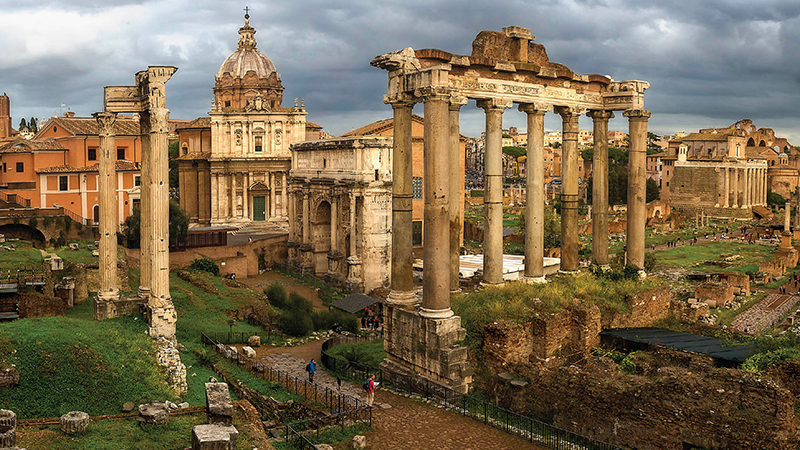
Get ready to dig into the remains of some of history’s greatest empires. In the next set of materials, you’ll explore how even the most powerful political forces can falter.
-
Guiding Questions
-
Guiding Questions
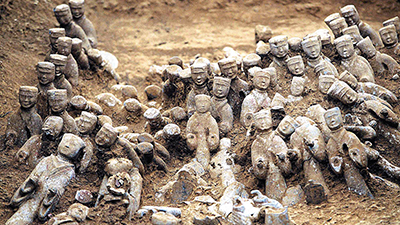

Need a hook to get students thinking about systems collapse? One OER Project teacher uses the game Jenga to illustrate that collapse is often a slow process with many causes that lead to one direct cause. If you want to take it to the next level, write one potential reason for collapse on each of the Jenga blocks. See more suggestions in this Community Forum post.
Visual metaphors can be powerful tools for expressing historical events and can help you deepen your understanding.



Khanmigo Writing Coach is an AI-powered tool designed specifically for teachers and students in K–12 and secondary classrooms. This tool can help you teach many OER Project: World History writing activities. It can be used to provide individual feedback and revisions on early student work. If you’re interested, check out this Khanmigo Writing Coach Guide.
In this writing activity, you’ll use evidence from sources to support an argument that responds to the prompt: How did states respond to the societal and political collapse after the fall of the Roman Empire and the Han Dynasty around 1200 CE?



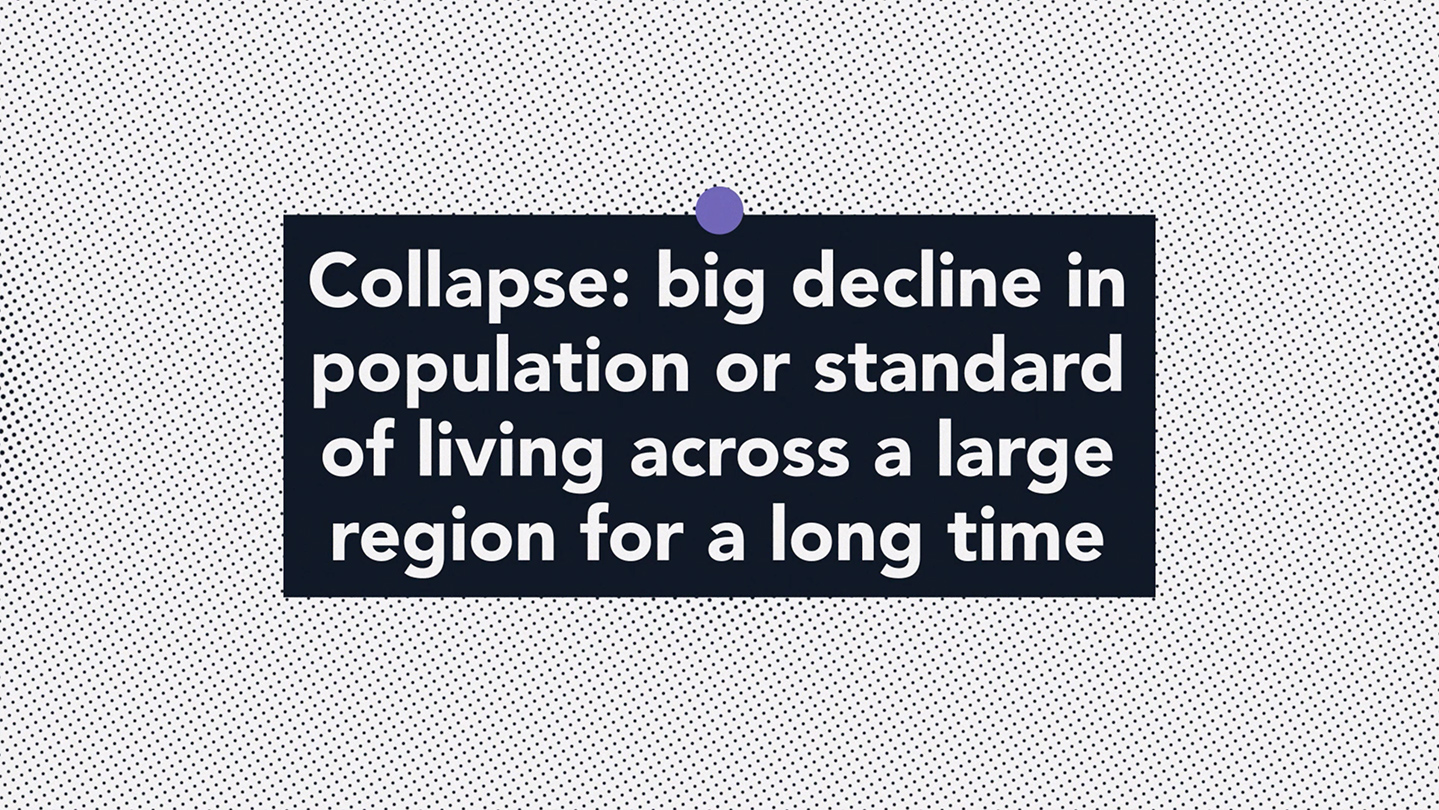
Collapse can strike any civilization, anywhere. Challenge your thinking with these materials on how and why societies fall.
-
Guiding Questions
-
Guiding Questions