
Science and Big History
Want to spice up your science or history of science content? Check out this curated selection of Big History resources aligned to different scientific disciplines. These materials help students make sense of the Universe—from the Big Bang and star formation to the origin of elements and life to the future. Use a single activity tomorrow or mix and match resources to build a lesson. The best part, everything is free and classroom-tested!

 Teaching Scientific Topics Using Big History

Big History Lesson 2.2 Teaching Guide: Big Bang
Get teacher guidance and sample answers to help build students’ astronomy skills as they discover how the Universe began.
Science in Big History: Graphic Biographies
Use one of these graphic biographies to teach students about scientists who have shaped our understanding of the Universe.

Blog: Teaching de-extinction: Are we living in the next ‘Jurassic Park’ sequel?
Is de-extinction real? And is it the “right” thing to do? Dig into the controversial science of “de-extinction,” which purports to be able to resurrect species like the woolly mammoth and the dire wolf.
Teaching Sensitive Topics
Teaching scientific topics like the Big Bang and evolution can sometimes be controversial. This guide provides support for having discussions that are difficult, but meaningful.
Lessons on Astronomy
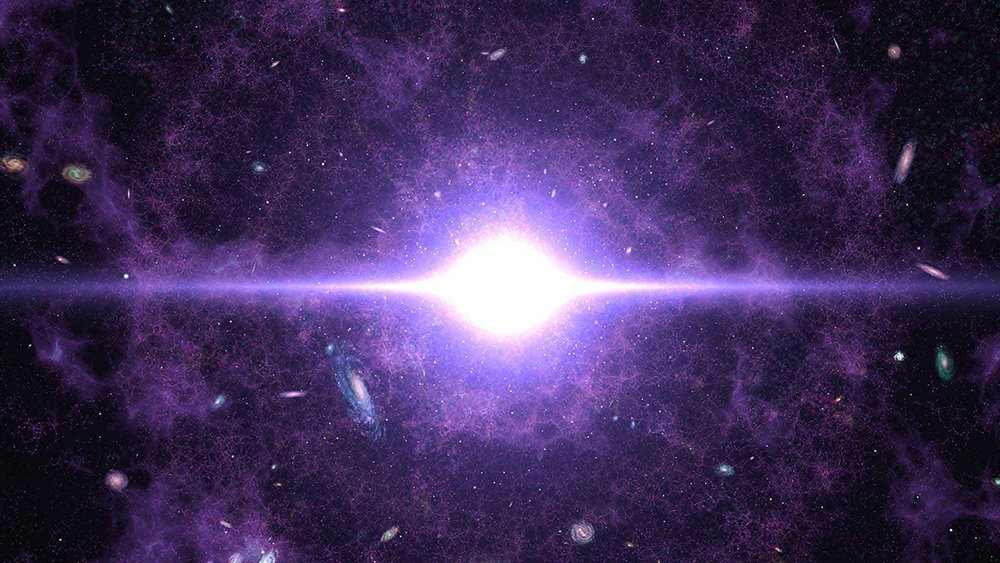
Lesson 2.2
Big Bang
Was the Big Bang the start of the Universe… or was it the beginning of one part of the multiverse? We don’t really know the answer to that question, but we do know a lot about what happened right after the Big Bang.
View Lesson
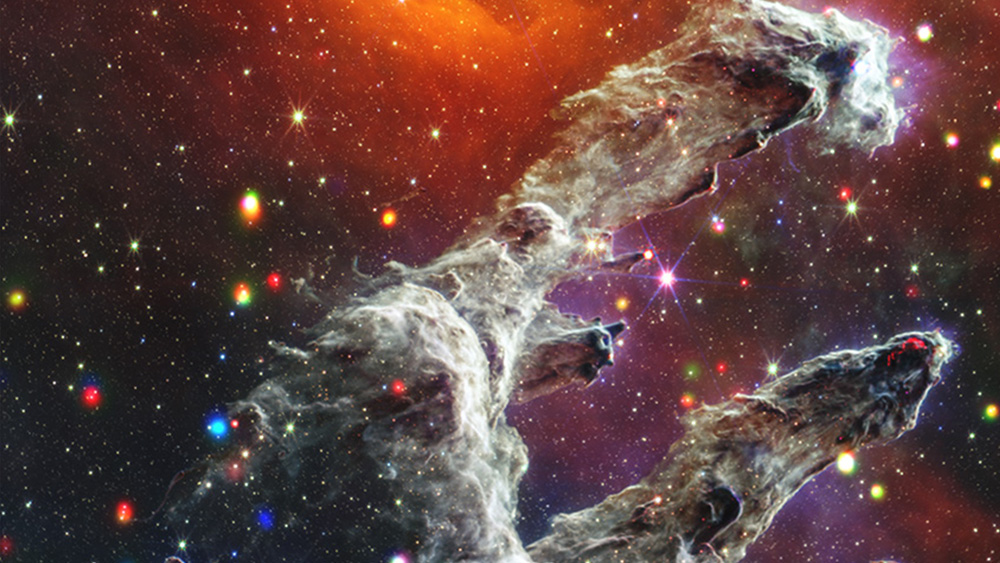
Lesson 2.3
Stars Form
Even on a dark, clear night, in the remotest place on Earth, you can only see a fraction of the true number of stars in the Universe. Explore how these trillions of celestial bodies added complexity to what was once a very simple place.
View Lesson
Dig Deeper: Astronomy Resources for Deeper Learning
Teach students to think at the largest scales imaginable as they investigate the origins of the Universe and the formation of stars.
The Big Bang

Video
The Big Bang
We may not know everything about the Big Bang, but there’s a lot we do know. Our knowledge of the Universe begins just a fraction of a second after the Big Bang took place.
Causes of Star Formation


Activity
Causes of Star Formation
Deepen your understanding of how stars form by identifying the causes that led to their creation.
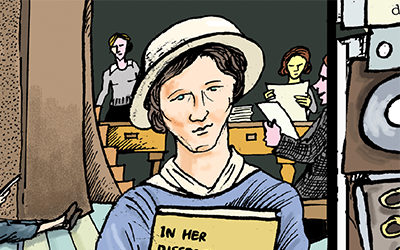
Intuition and Evidence: Cecilia Payne-Gaposchkin

Graphic Biographies
Intuition and Evidence: Cecilia Payne-Gaposchkin
Cecilia Payne-Gaposchkin wrote a dissertation that challenged our understanding of stars. Her male colleagues didn’t believe her, but within five years, her discoveries changed the way we view stars.
Lessons on Chemistry
Lesson 2.4
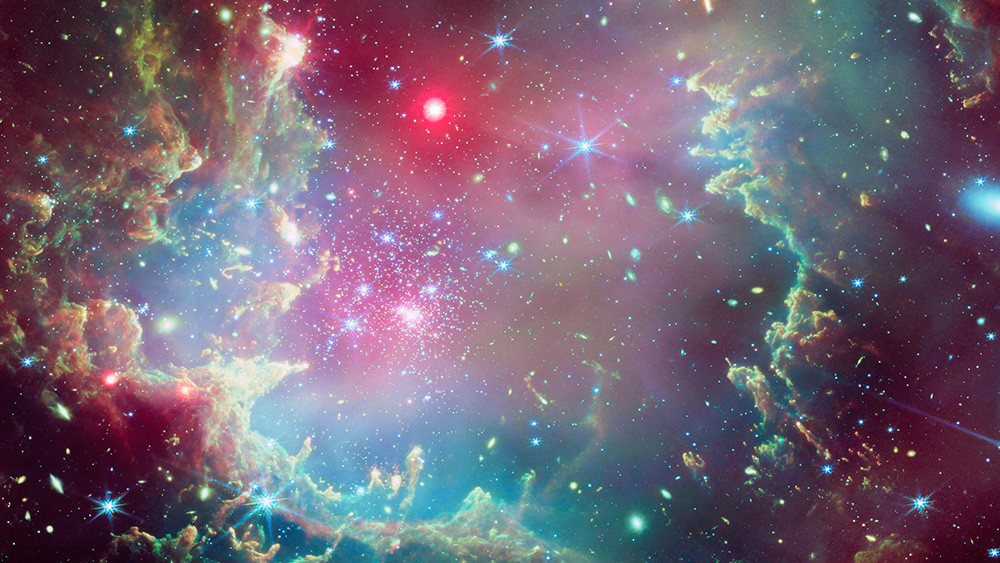
Stars Die
Stars make the night sky very beautiful, but their deaths can be even more beautiful than their lives. When stars go supernova, these massive explosions give us the elements that make everything from planets to ladybugs to you possible!
View Lesson
Dive In: Chemistry Materials for Deeper Learning
From the Islamic world to the creation of the periodic table, explore resources to help your students learn about chemistry.
Dmitri Mendeleev

Article
Dmitri Mendeleev
Inspired by a missed train and a dream, Mendeleev devised a comprehensive way to classify the elements.
Superhero Element
Activity
Superhero Element
Everything we know and use is made up of elements. But how do the reactions between elements create even more complexity?
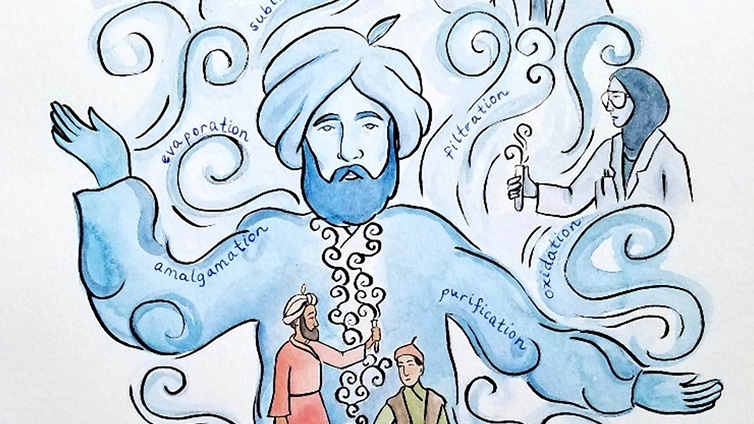
Jābir ibn Ḥayyān
Article
Jābir ibn Ḥayyān
Whether accomplished by an individual or a collection of people, Jābir Ibn Hayyān’s work with chemical substances was an inspiration and guide for the creators of chemistry who followed.
Lessons on Geology and Earth Science
Lesson 2.5
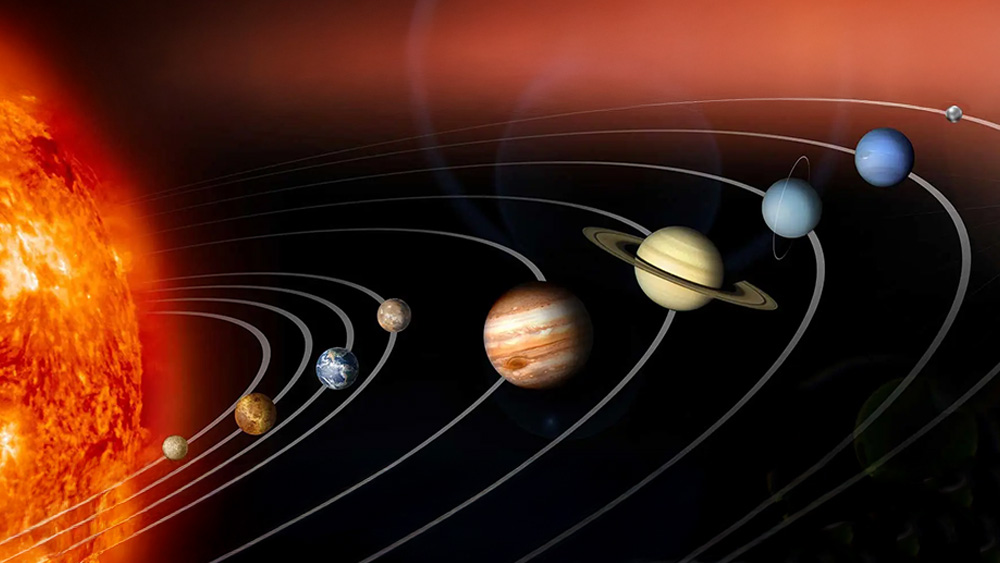
Solar System
You might know the names of all the planets in our Solar System, but do you know how our Sun and planets formed? Journey through time and space and witness the cosmic collisions that led to the formation of our planetary system.
View Lesson
Lesson 2.6
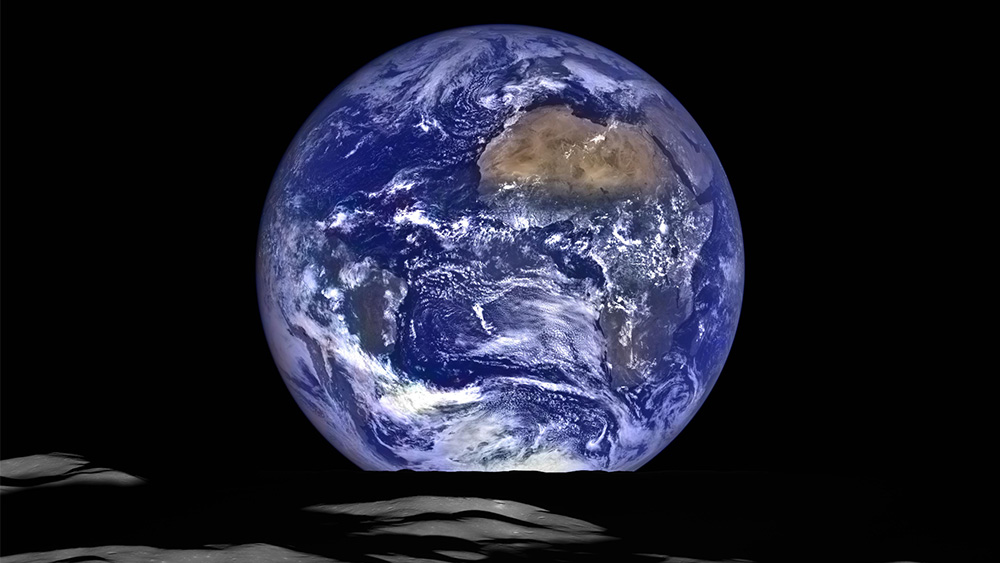
Earth
Learn about the fiery early days of our planet and why this one planet among countless others increased the complexity of the Universe in a way that may be unique.
View Lesson
Explore Further: Earth Science Resources for Deeper Learning
Explore activities on how humans changed the environment through farming, the use of fossil fuels, and advances in manufacturing and transportation.
Accretion Simulation
Activity
Accretion Simulation
Learn about the process of accretion by playing the role of the Sun. Or maybe you’ll be a dust particle that turns into a planet!
Plate Tectonics: Continents in Motion
Article
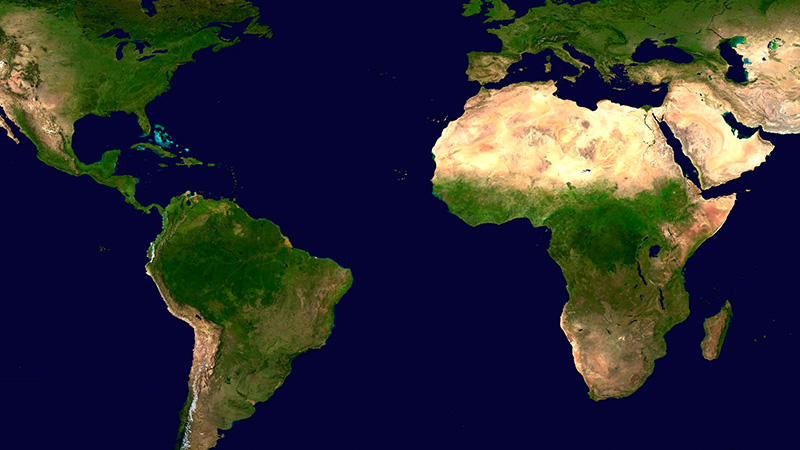
Plate Tectonics: Continents in Motion
It took decades for people to accept the theory of plate tectonics. Why did it take so long and what evidence do we have to support this theory?
Marie Tharp
Graphic Biographies
Marie Tharp
In the mid-1950s, Marie Tharp developed a theory of a rift valley running down the Atlantic Ocean. Initially dismissed as “girl talk” by male scientists, Tharp’s research proved the theory of continental drift.
Lessons on Biology
Lesson 3.2
Origins of Life
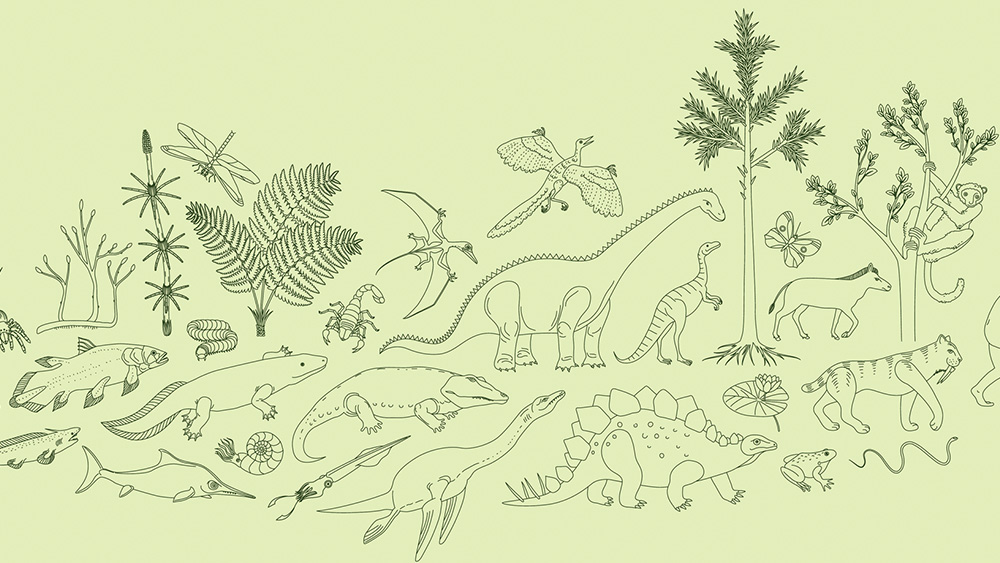
Did ancient meteors bring life to Earth or did organic chemicals from when lava mixed with water deep in the ocean? Let’s explore the theories about the origins of life on our planet.
View Lesson

Lesson 3.3
Evolution
Did you know that birds are descendants of dinosaurs? Or that our brains are very similar to lizards? How is that possible? It has a lot to do with environmental changes and that complex molecule you’ve been hearing so much about called DNA.
View Lesson
Even More: Biology Materials for Deeper Learning
Help your students understand the complexity of DNA and evolution, then have them try to apply those concepts to create a new species.
What Is DNA?

Video
What Is DNA?
The instructions for life are held within our DNA, but how does it work?
What Is Evolution?
Article
What Is Evolution?
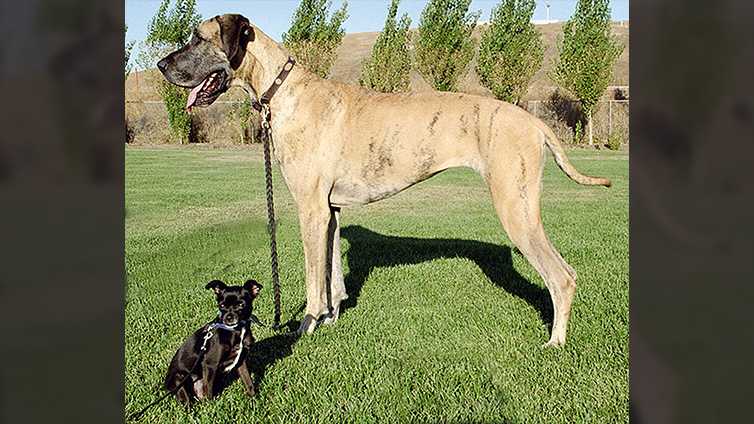
The secrets of evolution are wrapped up inside the cells of each living organism. Explore how life on Earth has adapted and evolved over time.
Invent a Species
Activity
Invent a Species
Now that you know how organisms adapt and change based on their environment, it’s time to figure out what changes might take place in the future.
Science-Related Assessments in Big History
Prewriting: Earth’s Structure and Processes


Assessment
Prewriting: Earth’s Structure and Processes
How has our understanding of Earth’s structure and processes changed over time? Time to unpack the prompt and brainstorm how you’ll respond.
DBQ Sources: Earth’s Structure and Processes
Assessment
DBQ Sources: Earth’s Structure and Processes
Use evidence from the sources to support your response to how our understanding of Earth’s structure and processes have changed.
Writing: Earth’s Structure and Processes
Assessment
Writing: Earth’s Structure and Processes
How has our understanding of Earth’s structure and processes changed over time? Time to unpack the prompt and brainstorm how you’ll respond.