The Scientific Revolution

Driving Question: How revolutionary was the Scientific Revolution?
In the sixteenth and seventeenth centuries, people started to question long-standing beliefs about the planets, nature, and the human body. Ancient theories that people had believed for centuries about the movement of planets and the causes of disease were soon overthrown. Were these new ways of thinking really revolutionary?
Learning Objectives:
- Evaluate the period of scientific inquiry and innovation during the sixteenth and seventeenth centuries.
- Assess how revolutionary this era of scientific inquiry was.
Vocab Terms:
- enlightenment
- Natural philosopher
- patronage
- revolution
- Scientific method
- Scientific Revolution
The scientific thinkers of the sixteenth and seventeenth centuries made discoveries that challenged long-held beliefs. See if you can figure out why this era of science was so revolutionary.


Why do historians call the era of European history spanning the sixteenth and seventeenth centuries the Scientific Revolution? This article and activity will help you critically evaluate this era of scientific advancement and innovation.
-
Guiding Questions
-
Before you read
Preview the questions below, and then skim the article. Be sure to look at the section headings and any images.
While you read
Look for answers to these questions:
- What types of scientific studies were done by medieval scholars?
- Why did people believe in geocentrism for so long, and who was the first person to propose a different view of the Universe?
- What helped the ideas of the Scientific Revolution spread to new places?
- Who were the patrons of science during this era, and why did these people think scientific discoveries were important?
- How did the Scientific Revolution lead to the Enlightenment?
After you read
Respond to this question: What parallels do you notice about the thinkers of the Scientific Revolution and the scientists of today?



Did you know? Johannes Kepler, the German astronomer who discovered the three laws of planetary motion, also had to defend his mother against charges of witchcraft. In 1615, his widowed mother, Katharina, was caught in the European witch hunts that overlapped with the Scientific Revolution. period when investigating planetary motion and prosecuting suspected witches could happen in the same community. A neighbor accused her of poisoning her, and a girl blamed her for an injured arm. Arrested in 1620, Katharina spent fourteen months in chains and faced threats of torture. Kepler moved his family to help defend her, challenging inconsistencies in the accusations and offering ordinary medical explanations for supposedly magical illnesses. His mother was released in 1621 but died six months later. So, we might think of the brilliant scientist, Kepler using science to defend against magical thinking. But here’s the thing: Kepler actually sorta believed that witches might exist. So, Kepler’s defense of his mother basically boiled down to: Sure, witches might be real, but you haven’t offered any evidence that proves my mother is one. He attacked the prosecution’s evidence rather than the concept of witchcraft itself.
For every great leap forward in scientific thought, there are lots of missteps and even some epic failures. Take a look at the history of some often weird and sometimes wrong scientific achievements.
-
Guiding Questions
-
Before you read
Preview the questions below, and then skim the article. Be sure to look at the section headings and any images.
While you read
Look for answers to these questions:
- What did Hennig Brand discover while trying to turn urine into gold, and why was this discovery important despite his failure?
- How were alchemists similar to other scientists of the Scientific Revolution, even though their goals seem like magic to us today?
- What was the weapon salve and how is it related to magnetism?
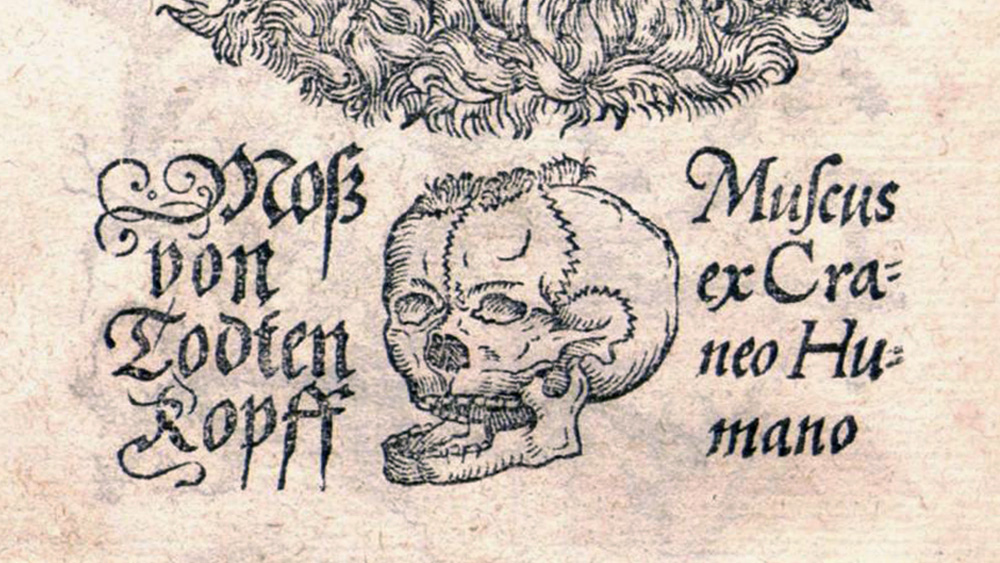
- Why did early anatomists like Andreas Vesalius resort to grave robbing?
After you read
Respond to this question: Do you agree that early modern ideas about magic were important to the advancement of science? Explain your answer.
-
Guiding Questions
-
Before you read
Preview the questions below, and then skim the comic, paying attention to things like prominent colors, shapes, and types of text and fonts. How do you know where to start and in which direction to read? What’s in the gutters (the space between panels)? Who or what is the focus of the comic?
While you read
Look for answers to these questions:
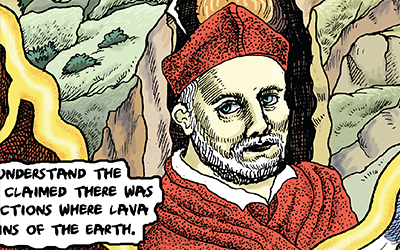
- What was Athanasius Kircher’s early life like?
- What did Kircher do to test his theory of the subterranean connections?
- How did Kircher’s work contribute to the decoding of Egyptian hieroglyphics?
- How does the page’s design, text, and illustrations contribute to your understanding of Athanasius Kircher’s story?
After you read
Respond to this question: Can you think of other mistakes or wrong turns throughout history that have contributed to our understanding of the world?

Science didn’t start during the Scientific Revolution. Scientific inquiry and advancements began long before then. Explore the long history of science with this video and activity.
-
Guiding Questions
-
Before you watch
Preview the questions below, and then review the transcript.
While you watch
Look for answers to these questions:
- What discoveries did Copernicus and Galileo make, and how were their ideas received?
- What is the scientific method, and who is credited with formally writing it down in Europe?
- How does Ibn al-Haytham’s work challenge the idea that the scientific method began in Europe?
- What are some examples of important scientific progress before the Scientific Revolution?
- Even if the Scientific Revolution wasn’t the first moment of science, what makes this period significant?
After you watch
Respond to this question: This video claims that science has been going on “basically forever.” But if you had to select one date or event that was the most important in this history of science, what would you pick?

Did the Scientific Revolution change the way people thought about science? Use your new historical knowledge to formulate an answer.



Learn how Muslim scholars advanced scientific thought centuries before the European Scientific Revolution.
-
Guiding Questions
-
Before you read
Preview the questions below, and then skim the article. Be sure to look at the section headings and any images.
While you read
Look for answers to these questions:
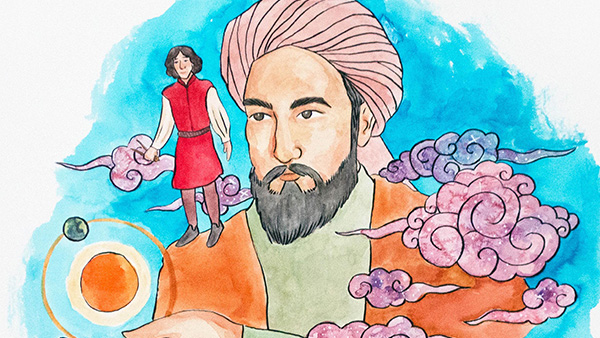
- The scientist Isaac Newton said, “If I have seen further, it is by standing on the shoulders of giants.” What did he mean?
- When and where was the “Golden Age”?
- What are “invisible giants”?
- Who contributes to collective learning?
- Why is it difficult to write the history of collective learning?
After you read
Respond to this question: What is an example of collective learning in your life?
-
Guiding Questions
-
Before you read
Preview the questions below, and then skim the article. Be sure to look at the section headings and any images.
While you read
Look for answers to these questions:
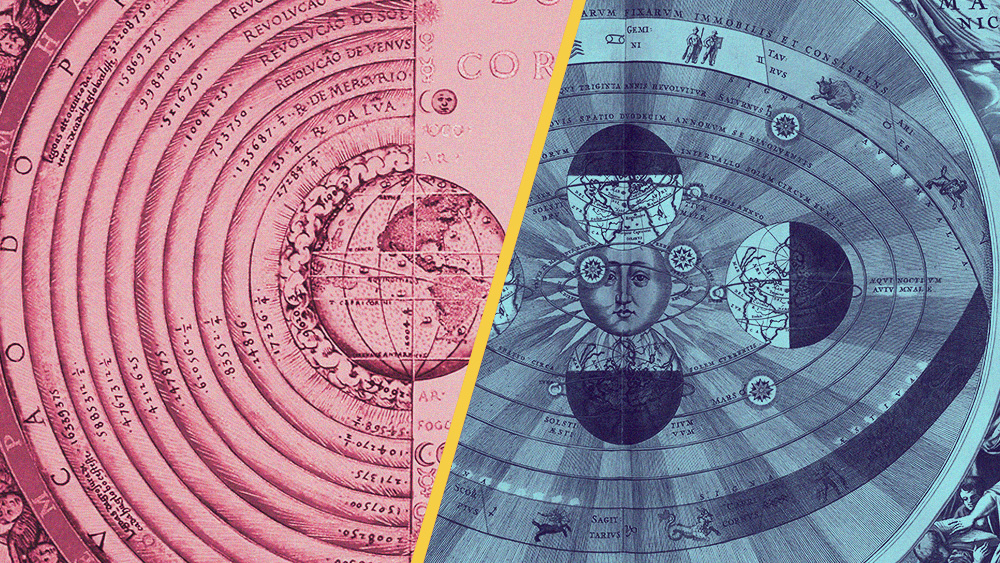
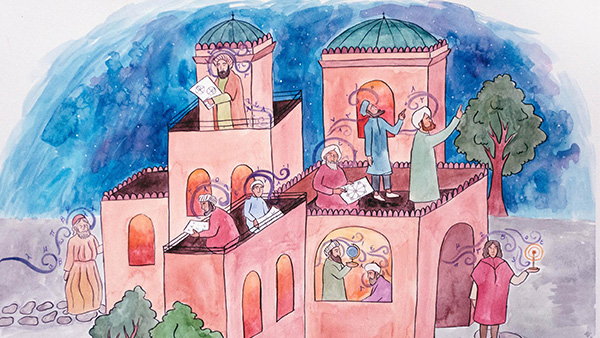
- What is the heliocentric model?
- What is one important contribution of a scholar who worked between the times of Ptolemy and Copernicus?
- Why was astronomy a major field in the Islamic world?
- Why was the Maragha Observatory significant?
- What are two differences between the two models of the Universe depicted in the article’s images?
After you read
Respond to this question: What evidence does the author provide to convince you that the work of scholars at the Maragha Observatory influenced Copernicus’s Sun-centered model?
-
Guiding Questions
-
Before you read
Preview the questions below, and then skim the article. Be sure to look at the section headings and any images.
While you read
Look for answers to these questions:
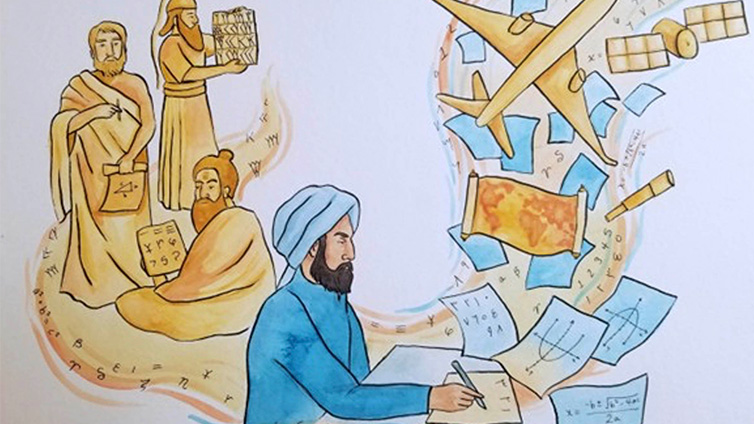
- What contributions did al-Khwarizmi make?
- Why is algebra important?
- Why was al-Khwarizmi’s adoption of the Hindu numbering system important?
- What was the House of Wisdom?
- Why was the House of Wisdom important?
After you read
Respond to this question: What are some things that you do on a daily basis that were made possible by the work of al-Khwarizmi?
-
Guiding Questions
-
Before you read
Preview the questions below, and then skim the article. Be sure to look at the section headings and any images.
While you read
Look for answers to these questions:
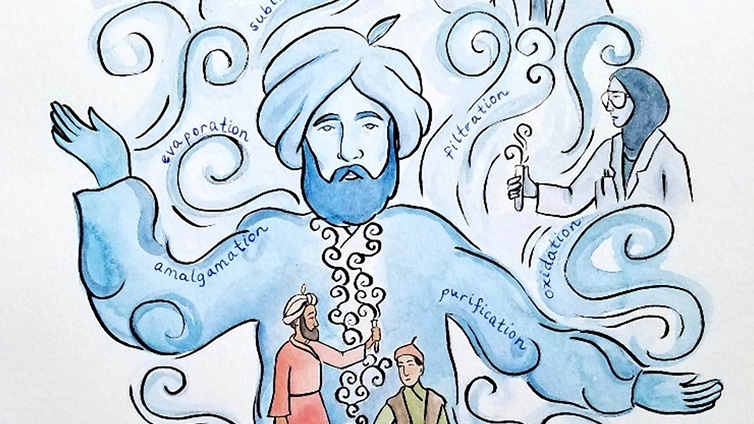
- What is the science of chemistry?
- How did humans work with chemical changes before the modern science of chemistry began?
- What contributions did Jābir Ibn Hayyān make?
- What is the debate about the identity of Jābir Ibn Hayyān?
- Why was Jābir Ibn Hayyān significant?
After you read
Respond to the following questions:
- The author of this article doesn’t describe Jābir Ibn Hayyān as a scientist, but he does suggest that Ibn Hayyān used many strategies and techniques that scientists would use. Why do you think the author chose not to call him a scientist?
- Why does it matter whom we describe as a scientist?
-
Guiding Questions
-
Before you read
Preview the questions below, and then skim the article. Be sure to look at the section headings and any images.
While you read
Look for answers to these questions:
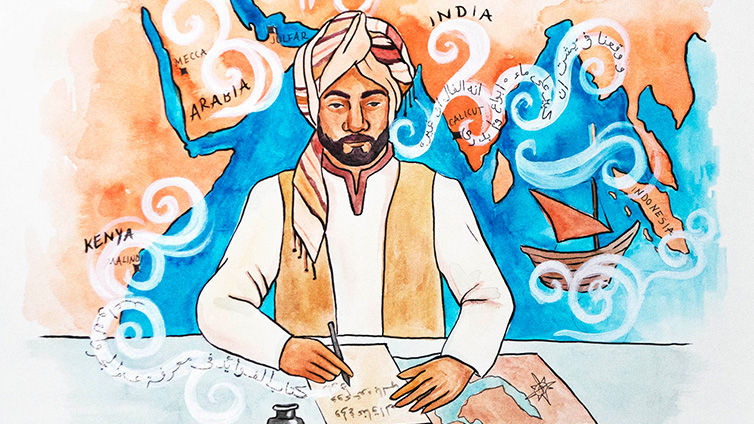
- What subjects did Ahmad Ibn Mājid have to study to become an Indian Ocean sailor?
- Why was it important to learn about geography and astronomy if you were a sailor or merchant?
- Why was knowledge of languages, culture, and Islam important if you were an Indian Ocean sailor?
- How is Ahmad Ibn Mājid’s life a story of collective learning?
After you read
Respond to this question: How does the story of Ahmad Ibn Mājid and Vasco da Gama contribute to your understanding of collective learning?