
Origins of Life


Driving Question: How did life on Earth begin and change?
Journey to the depths of Earth’s early oceans to investigate the origins of life. Then, explore how life adapted and changed as life on Earth evolved.
Learning Objectives:
- Describe the origins of life on Earth and how life changed over time.
- Define the term biosphere.
- Evaluate how geography and climate have impacted life on Earth.
Vocab Terms:
Did you know that from classical Greece to the early nineteenth century, many scientists believed that life could spontaneously generate? Kick off this lesson about the origins of life by sharing this quote from an experiment conducted by Jean-Baptiste Van Helmont (1580–1644): “If a soiled shirt is placed in … a vessel containing grains of wheat, the reaction … will, after approximately twenty-one days, transform the wheat into mice.” Then, ask them why they think the belief in spontaneous generation was popular.
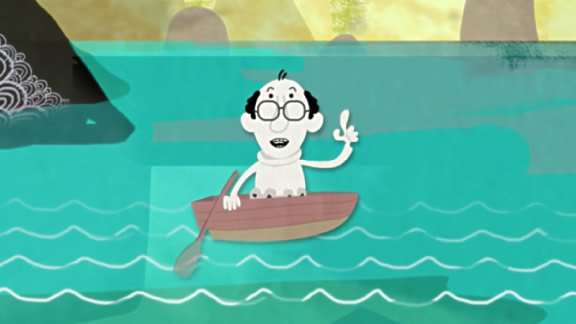
How did this whole “life evolving over billions of years” thing get started anyway?


There are a few theories about how life on Earth began. The slideshow and activity coming up next walk you through the most commonly accepted theory.
How Did Life on Earth Begin?




Want to extend this activity? Have students create small foldables that identify the characteristics of each mini-threshold, and then make a claim with a drawing about what they think the next mini-threshold might be. Check out this community conversation to see student exemplars.
For hundreds of thousands of years, life on Earth was very simple. But, as you’ve seen a bunch in this course already, complexity changes everything. Let’s watch how it happened, and then review the predictions you made.
-
Guiding Questions
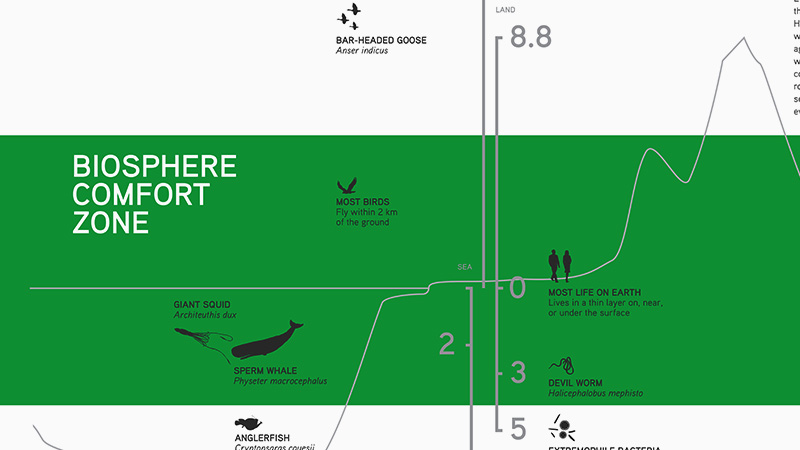
Infographics help students engage in different forms of media literacy and engage critical thinking skills, and they encourage flexible and creative thinking. This infographic uses a mix of data, images, and explanatory text to help boost reading comprehension and embed information in memory while also helping to lessen the cognitive load (compared to blocks of text).
The biosphere is Earth’s “comfort zone.” It’s the rich, fragile environment where most living organisms exist. Use this article and activity to learn more about how the biosphere protects us from extremes that can be dangerous for life.
-
Guiding Questions
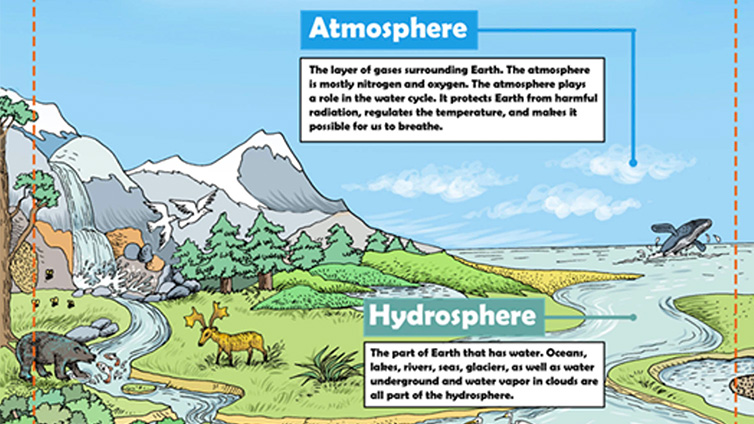


The biomes activity aligns with Standard 7 of the National Geography Standards (NGS) and helps students analyze the physical processes that shape life on Earth. Explore Big History’s robust geography resources and see how each activity aligns to the NGS in this alignment and placement doc.
Do you think you could live in a place that gets a lot of rain? What about one that’s always cold? Test your map-reading skills to determine how climate impacts Earth.
Geography: Climographs


You’ve learned about the beginning of life on Earth and how life changed over time. Surely something that epic deserves a poem? Try your hand at an Ode to Life Itself!



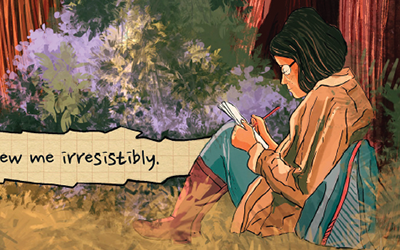
Late in her life, Ynés Mexía became the first Mexican American female botanist. Despite male colleagues’ attempts to prevent her, she introduced hundreds of new species to science during her travels.
-
Guiding Questions

There is still so much that we don’t know about the origins of life on Earth.
-
Guiding Questions
