Direct Impacts of Climate Change

Driving Question: How is climate change affecting natural systems?
How are rising global temperatures directly tied to changes in Earth’s natural systems? This lesson explores why every fraction of a degree matters in shaping climate outcomes.
Learning Objectives:
- Identify and describe direct impacts of climate change.
- Analyze a direct impact to understand it’s effects and potential future consequences.
- Explain why small amounts of warming are significant when it comes to climate impacts.
Vocab Terms:
In this course, we define direct impacts as measurable changes in Earth’s natural systems caused directly by warming temperatures.
If you haven’t already, check out the article “The Impacts of Climate Change” from the previous lesson to help students understand the distinction between direct and indirect climate impacts.
What are some direct impacts of climate change, and how do changes in one system effect other areas?


Ever heard of a grolar bear (grizzly + polar bear)? What about a coywolf (coyote + wolf)? As climate change and habitat loss push species into overlapping ranges, hybridization is becoming more common among animals that can interbreed. In some cases, this can boost genetic diversity and improve a population’s ability to adapt. But it can also create challenges—as in the case of the infamous liger—where hybrids may suffer from reduced fertility or genetically linked health issues.
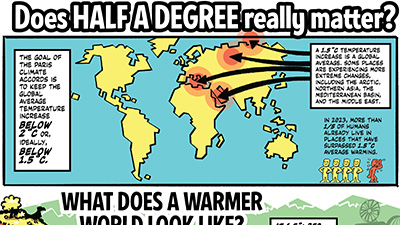
How much of an impact can half a degree really have? Study the infographic to see how a seemingly small temperature increase can make a big difference, and then complete the writing activity to make a case for why each fraction of a degree matters.
-
Guiding Questions



Teaching in a science classroom? These activities align closely with NGSS learning standards. Check out OER Project: Climate Standards Alignment to learn more.
Read the article to explore some of the numbers behind the impacts of rising temperatures on one natural system. Then, do your own research and investigate a direct impact of your choice.

-
Guiding Questions



Did you know: A common misconception is that the Sahara desert is the largest desert in the world. In fact, it is the largest hot desert in the world. The largest desert in the world? It’s actually the Antarctic desert (5.5 million square miles), followed closely by the Arctic desert (5.4 million square miles), with little ol’ Sahara desert coming in third (3.5 million square miles).
The Sahara desert—now one of the hottest, driest places on Earth—was once lush and green. What caused this dramatic shift, and what might it reveal about how climate change could reshape regions today? Use the accompanying activity to brainstorm some ideas before you start watching the video, then answer the activity questions as you watch.
.jpg?rev=916dfcbe5df344a2ab932a5874b35be6)

New to working with climate maps? No problem. This activity introduces students to reading and interpreting complex data visuals.
Ready to go further? The extension at the end of the activity offers students the chance to explore climate maps and impacts more deeply.
Practice your data-literacy skills as you explore how our actions can influence the severity of climate impacts over time.
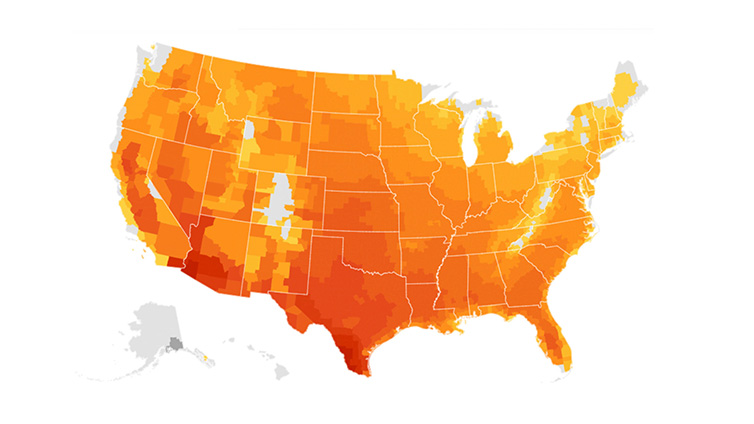
Think about the ways many different systems are interconnected and can be impacted by climate change, and what that means for you and your community.