Cookie Policy

Our website uses cookies to understand content and feature usage to drive site improvements over time. To learn more, review our Terms of Use and Privacy Policy.

OER Logo

Lesson 7.3 Vocab

alien
Jump To Navigation
Definition

a being from a planet that is not Earth; extraterrestrial

Use In A Sentence

Movies often portray aliens as little green creatures from Mars.

colonize
Jump To Navigation
Definition

to establish or form a colony on; settle

Use In A Sentence

The British began to colonize Australia in the late eighteenth century.

exploration
Jump To Navigation
Definition

the act or an instance of traveling across or through for the purpose of discovery or investigation

Use In A Sentence

For the competition, participants had to do an exploration of the possible alternatives to fossil fuels.

magnetic field
Jump To Navigation
Definition

a region of space in which a magnetic force occurs, especially as a result of electrical current or the motions of charged particles such as electrons

Use In A Sentence

Scientists think that sunspots are caused by strong magnetic fields below the surface of the sun.

radiation
Jump To Navigation
Definition

the emission of particles or waves of energy, as by radioactive material or by electrical circuits or devices

Use In A Sentence

Many people are concerned about toxic radiation from nuclear waste.

terraforming
Jump To Navigation
Definition

to change the form of a planet or other space object so that it resembles Earth

Use In A Sentence

People have proposed terraforming Mars to make it suitable for humans to live there.

Space

Driving Question: How might space exploration increase complexity?

Will we colonize other planets? Is there alien life somewhere in the Universe? Although these questions might be answered in the near future, we could make some predictions now about where we’re headed.

Learning Objectives:

  1. Evaluate the likelihood of humans colonizing other planets.
  2. Explain how space exploration might impact our future.
STEP 1

Opener: Space

Space has been a theater of the imagination since before we even understood what it was. Let’s do some imagining of our own!

STEP 2

The Final Frontier

Teaching Tools

Learning about Mars is always at the top of the list of students’ favorite Big History topics. Teachers in this conversation External link share how they extended student learning by including clips and excerpts from The Martian.

Will we meet extraterrestrial lifeforms in your lifetime? In the lifetime of our species? No one knows, but this video lays out some of the practical considerations of a potential first contact.

Space: The Final Threshold? External link

Will the next chapter of the Universe’s story be set beyond Earth or even beyond our Solar System?
STEP 3

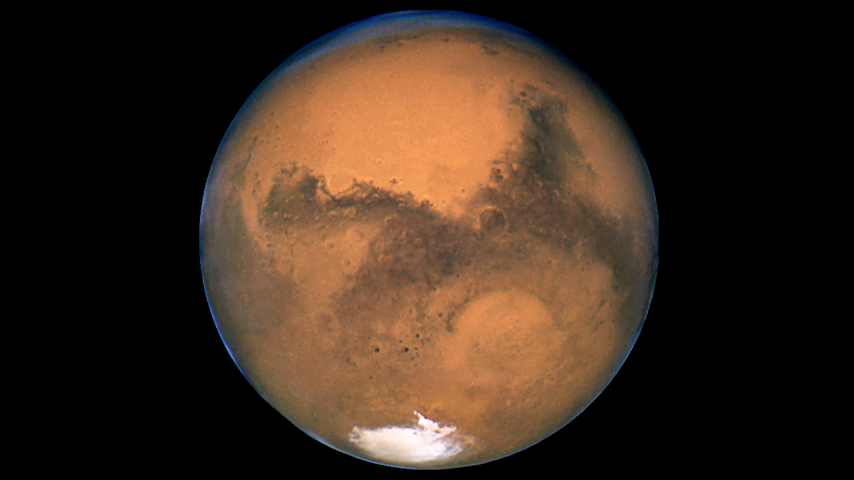
The Red Planet

Teaching Tools

Want to know more about life on Mars? Astrobiologist David Flannery discusses his work with NASA’s Jet Propulsion Laboratory in Episode 5 of the Unknowns with David Christian External link podcast. Check out 10:28 to 18:28 of the full episode. 

Could we someday inhabit Mars? Is it even a good idea? Let’s see if Martian life sounds like something you’d personally enjoy.

A Day on Mars External link

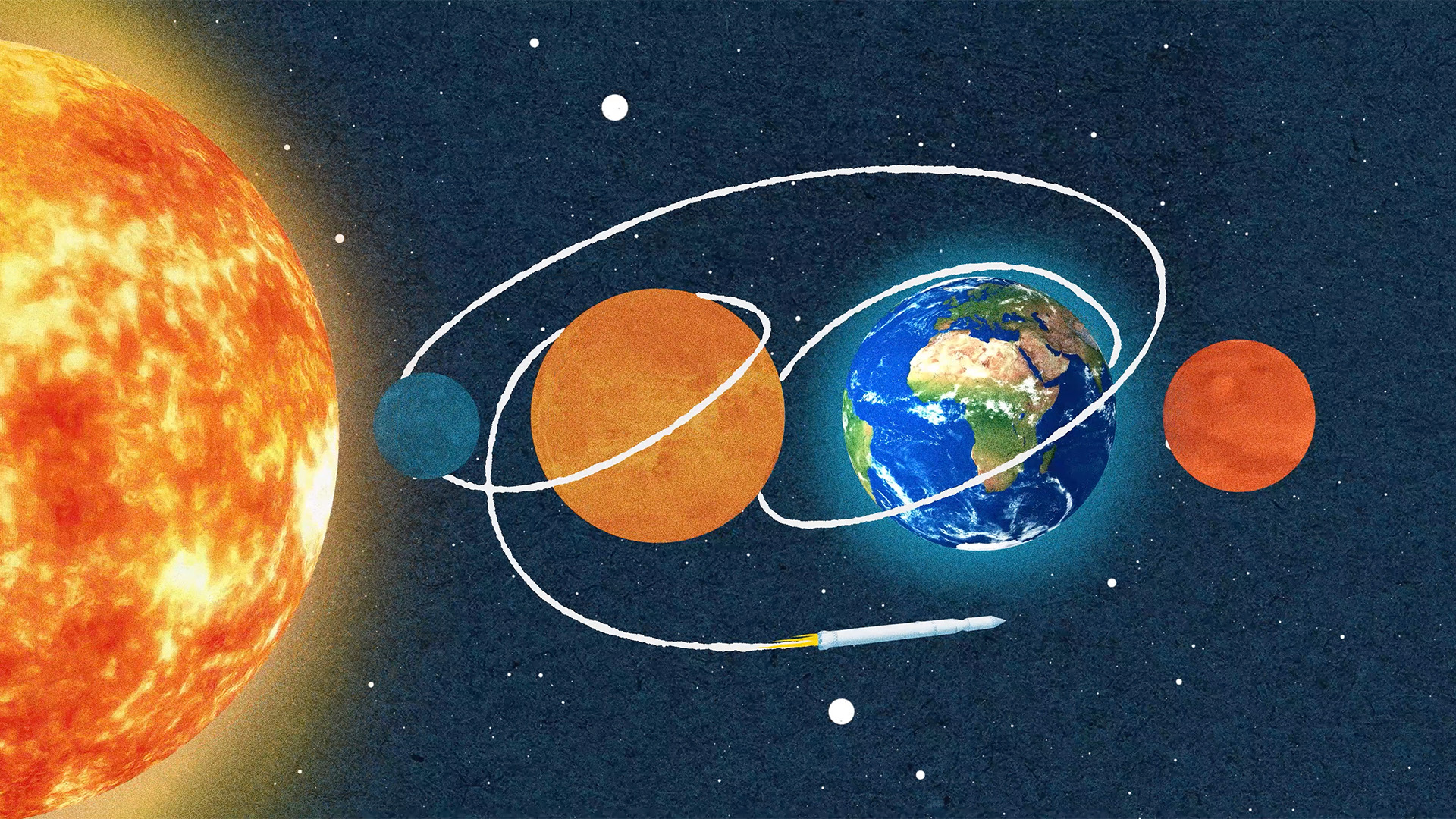
Could Mars be our new home planet? We know we can land rovers on the “Red Planet” but getting humans there will be trickier.

“Unknowns” Podcast Episode 5 Clip External link

Why do we want to go to Mars, and will we have fun once we get there? Big History founder David Christian chats with astrobiologist David Flannery about life on Mars.
07:47
live
CC

Subtitles

×
HD

Quality

×
STEP 4

Closer: Space

Teaching Tools

Don’t forget that the closing activity for this lesson will come in handy when students decide what the next threshold might be in the last lesson of this unit.

Now that you’ve got a little more space knowledge under your belt, we want to hear what you think about our odds of voyaging into the great beyond!