Our website uses cookies to understand content and feature usage to drive site improvements over time. To learn more, review our Terms of Use and Privacy Policy.
In 1994, nearly a million Rwandans were murdered in 100 days. Neighbors turned into murderers as world leaders turned a blind eye.
Think about the following questions as you watch the video
How did colonial rule change the relationship between Hutu and Tutsi in Rwanda?
What event triggered the start of the genocide in April 1994?
What role did radio broadcasts play in the genocide?
How did the UN and other world powers respond as the killings were happening in Rwanda?
What is gacaca, and why did Rwanda use it after the genocide?
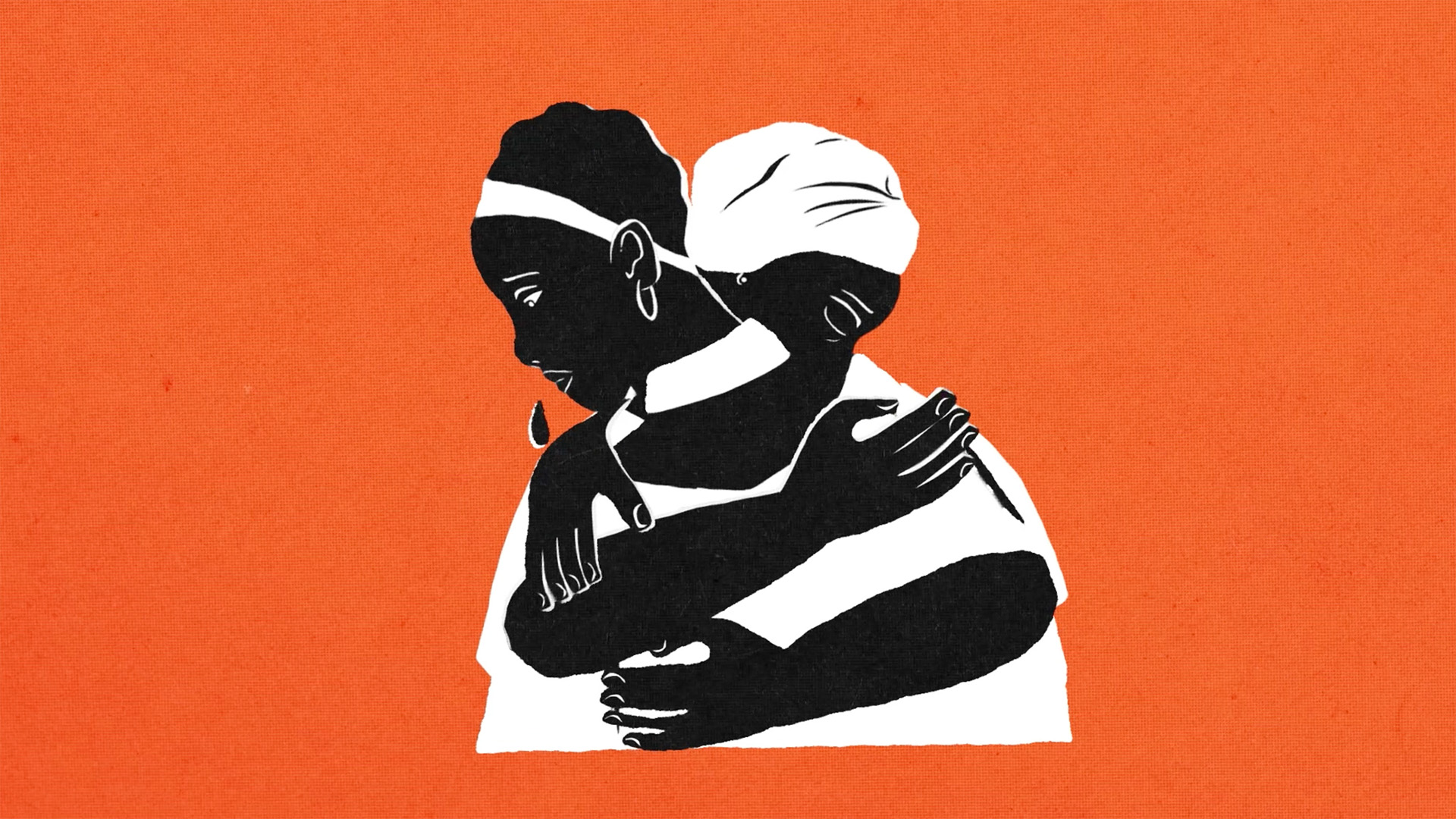
: Imagine if your own neighbors suddenly wanted to murder you. For Kakuze, Monica, and
: millions of other Rwandans, this became their reality overnight. In 1994, both women saw their peaceful
: villages transformed into killing fields as families, friends, and community members
: turned against each other. When the slaughter finally ended 100 days later, nearly a
: million people were dead. But in an era of global communication and mass media coverage, how
: could an atrocity like this happen—and why did no one care enough to stop it? The roots
: of the Rwandan genocide reach back to the pre-colonial era. For centuries, Rwanda has been
: dominated by two main ethnic groups: Hutu, like Monica, and Tutsi, like Kakuze. Hutu comprised
: the majority of the population and traditionally worked as farmers, governed by the
: pastoralist Tutsi. While these divisions played a role in organizing social and economic life,
: they were still relatively fluid. Hutu and Tutsi shared many cultural practices and
: often intermarried. But this relationship changed in the late 19th century, when Rwanda
: became a colony: first of Germany, then Belgium. During this time, the distinction between
: Hutu and Tutsi became rigid and racialized. European colonists claimed that Tutsis
: were mentally and physically superior to Hutus. They introduced a system of identification cards
: that classified Rwandans by their ethnicity, which they used to deny Hutus access to jobs and
: education...while elevating Tutsis to positions of power within the colonial government.
: When Rwanda gained independence in 1962, the resentment from decades of racial hierarchy
: exploded into violent conflict. Anti-Tutsi attacks became common under the new Hutu-led
: government, and more than 300,000 Tutsis fled to neighboring countries. But in Uganda, a
: group of Tutsi exiles were preparing to fight back. They founded the Rwandan Patriotic
: Front or RPF, a militant group that aimed to overthrow the government of Rwanda and secure
: the Tutsi's right of return. In 1990, the RPF invaded Rwanda, inciting a civil war.
: Hutu extremists used the invasion as a pretense for their anti-Tutsi agenda,
: claiming that all Tutsis were dangerous foreign adversaries. They developed a supremacist ideology
: known as Hutu power, which asserted Hutu's superiority and called for Tutsis to be excluded
: from public life. Eventually, they began drafting plans for an extermination campaign,
: drawing up lists of Tutsi civilians and distributing weapons to Hutus.
: So in April 1994, the Hutu were already primed for violence when President Juvénal Habyarimana’s
: plane was shot down by unknown assassins. As one extremist radio station put it,
: it was time for them to "get to work." Over the next 100 days, Hutu supremacists carried out a brutal
: genocide. Samantha Power called it "the fastest, most efficient killing spree of the 20th century."
: But they didn't use advanced weaponry or industrialized killing centers.
: Instead, every day, Hutus went door to door in their own villages, murdering their Tutsi neighbors
: with clubs and machetes, and raping women and girls. The violence was spurred on by daily radio
: programs that dehumanized the Tutsi, calling them cockroaches, invaders, and enslavers
: whose extermination meant freedom for the Hutu. While Tutsis were the primary victims of the
: genocide, Hutus who refused to participate in the killings were also targeted. Monica was forced
: to watch as her own brothers murdered her Tutsi husband and their six children. As their screams of
: terror pierced the air, Monica's father told her that it was her own fault for marrying a snake.
: Many Tutsi tried to escape the slaughter by hiding in churches, schools, forests, even swamps.
: After witnessing the murder of her father, uncles, and older sister, Kakuze fled with her surviving
: siblings to another part of their hometown. But the Hutu militias were ruthless and thorough.
: They located Kakuze after a coworker betrayed her, killing the rest of her siblings
: and leaving her for dead. You might think that the only way someone could ignore these atrocities is
: by not knowing anything about them. But the world was very aware of what was taking place in Rwanda-
: in fact, many powerful nations were deliberately ignoring it. As the killings began,
: the UN Security Council voted to withdraw most of the peacekeeping forces already stationed
: in Rwanda, unwilling to risk their own troops for a country that didn't serve a strategic interest.
: Heads of state euphemistically referred to the genocide as an "internal conflict,"
: while Western media outlets asserted that the killings were merely a
: continuation of Rwanda's civil war, not a campaign against civilians.
: US leaders even refused to shut down the anti-Tutsi broadcasts that were fueling the genocide.
: As one senior defense official remarked, "Radios don't kill people. People kill people."
: Though the seeds of ethnic violence in Rwanda had been sown by the Western world,
: they could not muster the political will to stop it. The genocide continued until mid-July,
: when Tutsi-led RPF forces ceased control of the country and formed a new government.
: By that time, nearly a million people were dead, and survivors like Kakuze and Monica
: had lost everything—their families, their homes, their livelihoods. Now, officials face an important
: question: what to do with the large portion of the population that had participated in the
: killings. In 1997, as the first genocide trials began, more than 120,000 suspects were
: being held in Rwandan prisons. Hearing all of their cases would likely take over a century.
: To speed up the process, a 2001 law revived the traditional practice of gacaca,
: a localized court system with judges elected from the community. The government also created
: social programs designed to promote a new vision for the country: Ndi Umunyarwanda,
: or “I am Rwandan.” Not Hutu or Tutsi, but a shared identity rooted in dignity for all.
: In the years following the genocide, Kakuze and Monica have worked hard to rebuild their
: lives. Kakuze moved to eastern Rwanda, where she founded a school for vulnerable children
: and started her own family. She currently teaches vocational skills to women of all backgrounds.
: After returning to Rwanda from a refugee camp in Tanzania,
: Monica joined a group that promotes dialogue between survivors and perpetrators. She
: now has two children and a home her brothers helped build for her after their release from prison.
: Though Kakuze and Monica were on opposite sides of the conflict, reconciliation efforts
: have helped both of them forgive the people who hurt them. Still, nothing can bring back the
: hundreds of thousands who lost their lives to genocide. In 2000, an investigation concluded
: that the UN had failed to stop the slaughter due in large part to major powers like the US,
: who discouraged any form of intervention. Bill Clinton later called it one of the biggest
: regrets of his presidency. But it's important to remember that inaction is itself a choice.
: Western leaders were not simply unaware of the horrors taking place. In reality, they took