Our website uses cookies to understand content and feature usage to drive site improvements over time. To learn more, review our Terms of Use and Privacy Policy.
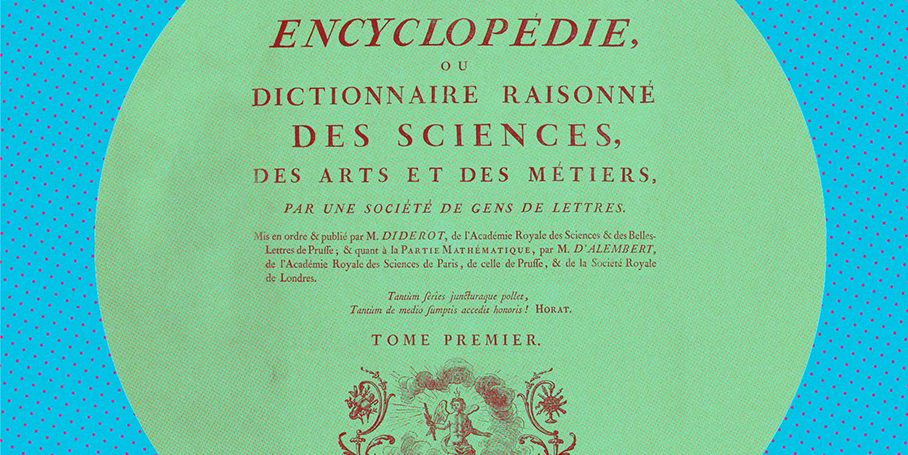
Diderot’s Encyclopédie grew from a French translation project into a major Enlightenment work. It was first published in 1751. It gathered science, arts, and crafts to share knowledge more widely. It challenged old authority and religious dogma, and it faced censorship. The work urged readers to use reason, question old ideas, and value both practical skill and abstract thought. Its wide scope helped shape later reference works and a modern view of knowledge as open, searchable, and debated.
Diderot’s Encyclopédie evolved from a translation project into a central Enlightenment text promoting reason and skepticism.
Diderot’s Encyclopédie challenged traditional authority and religious dogma, making it a radical and censored work.
The Encyclopédie aimed to organize all human knowledge for scholars and educated readers seeking practical understanding.
The Encyclopédie reflected Enlightenment values by treating diverse subjects as worthy of reasoned human investigation.
Diderot’s Encyclopédie changed ideas about knowledge by making information more accessible and open to debate.
Diderot’s Encyclopedia was a work produced through the massive effort of many authors and thinkers. It attempted to catalog human knowledge and reimagine the world.
Think about the following questions as you watch the video
How was Paris in 1750 a ‘contradiction’?
How was the encyclopedia also representative of this contradiction?
What political and national revolutions does the video connect to the philosophes and their encyclopedia?
Why, according to the video, did some “enlightened monarchs” and aristocrats support this work?
Why was the encyclopedia so controversial?
: (music playing)
: Why start a history course in 1750?
: What makes this moment a turning point?
: And what makes 18th century France a good place to start?
: In many ways, 18th century France was a bridge
: between the medieval and modern worlds.
: The capital city of Paris, in particular,
: symbolizes this bridge.
: The roads in Paris weren't paved
: and often turned into pools of mud and excrement--
: both human and animal.
: But these streets were also
: some of the first to be illuminated at night,
: which gave it the nickname, the "City of Lights."
: This proved to be quite a contradiction.
: Paris was viewed as a city
: where men and women of the upper classes
: wore fine clothes and powdered wigs.
: In Paris, the wealthy strolled on well-lit streets,
: discussing new approaches to art, philosophy,
: science, and politics.
: But when they walked the muddy streets,
: they sometimes paid workers
: to brush the filth off of them
: as they traveled.
: Here was the contradiction--
: while there were educated philosophes, or scholars,
: meeting in aristocratic salons
: and keeping their clothes impeccably clean,
: most of those living in Paris were working class or poor.
: They worked as artisans or servants,
: book binders, printers,
: bakers, makers of cutlery,
: hats and clothing,
: maids and horsemen,
: and filth-scrapers and cooks.
: These people were the engine of the city.
: These two very different worlds
: converged not just in the streets of Paris,
: but also in one controversial-- and very large--
: 18th century publication,
: the "Encyclopédie," or "Encyclopedia."
: This encyclopedia began its life right around 1750,
: when Denis Diderot, a writer living in Paris,
: was hired to translate
: a two-volume English encyclopedia into French.
: But this simple project
: eventually grew into a 17-volume text--
: with an additional 11 volumes of illustrations--
: on an array of historical, philosophical,
: and scientific topics,
: plus descriptions of the various arts
: and trades of the 18th century.
: This was a monumental work,
: long predating Wikipedia
: and even before the publication
: of the "Encyclopedia Britannica,"
: which your parents and grandparents probably used.
: The "Encyclopedia" was an attempt
: to define and alphabetize knowledge.
: It was the most significant example of collective learning--
: the sharing and preserving of knowledge across generations-–
: in its day.
: It took decades to complete
: and had over 100 contributors.
: At a time when the average Paris family
: spent over half their income on basic bread,
: producing the "Encyclopedia"
: cost the equivalent of almost $11 million.
: So the "Encyclopedia," like Paris,
: bridged the medieval and the modern.
: It catalogues all the ordinary trades
: of the 18th century,
: providing a window into what life was like
: before the Industrial Revolution.
: But it is also a modern critique of authority--
: both of the king and the Catholic Church.
: Many of the ideas expressed in the "Encyclopedia"
: contributed to social and political transformation,
: and eventually the French Revolution.
: One way it did this
: was simply by dignifying the experience of work.
: Common trades and materials were included in its pages,
: right alongside the most visionary political
: and philosophical ideas of the time.
: Sailmaking and science, tobacco and tolerance,
: cosmology and cotton, natural rights and navigator
: all jostled up next to one another.
: In its time, the "Encyclopedia" was extremely controversial
: and it even landed Diderot in jail.
: In 18th century France, it was dangerous to write anything
: that seemed to call into question social hierarchies,
: and the authority of king or church.
: But there were many scholars who were doing just that.
: The French authorities used spies and the threat
: of imprisonment, torture, or even death to scare authors.
: Some critics, like Voltaire, went into exile.
: Others worked in secret and published anonymously.
: Still, ideas spread.
: New ideas about representative government,
: the consent of the governed,
: and freedom of speech and press were discussed in salons
: and on the pages of anonymous written works.
: Innovations in printing,
: coupled with an increase in literacy,
: meant that these ideas were also being discussed beyond France.
: These ideas made their way
: along networks of trade and communication
: throughout Europe and the Americas.
: This atmosphere of new ideas and debate
: set the stage for the political revolutions
: of the 18th and 19th centuries in the American colonies,
: France, Haiti, and Latin America.
: This is why Diderot was jailed.
: The French police and book censors
: were always looking for works that challenged
: the established authority of church and state.
: King and priest alike were afraid of the "Encyclopedia"
: and its radical ideas.
: The state banned its publication.
: But together, the philosophes
: who contributed to the "Encyclopedia"
: made up a who's who of intellectual France,
: and the king couldn't jail them all.
: They were educated men--
: well-connected, white, and middle class,
: plus a few aristocrats, too.
: Historians think that two women
: may have contributed anonymously to the work.
: We know that other women hosted salons
: or provided financial support.
: The most famous patron
: and protector of the Encyclopedia
: was Madame de Pompadour,
: mistress of the French king Louis XV.
: So here is another contradiction.
: Why would the mistress of the king
: support such a dangerous work?
: Actually, several European kings and queens--
: known as enlightened monarchs-- did.
: Frederick the Great of Prussia
: and Catherine the Great of Russia
: both acted as patrons of certain philosophes.
: Catherine paid Diderot an annual fee
: for the upkeep of his library,
: which she inherited after his death.
: Frederick gave Voltaire a place to hide and work
: when he was exiled from Paris.
: So there were people in high places
: who appreciated the "Encyclopedia."
: These enlightened aristocrats and monarchs
: may have sensed the change in the political air,
: and thought it was better to support reform
: than to repress change and risk revolution.
: The philosophes themselves viewed their work
: as bringing the light of reason
: to a world of superstition and abuse of power.
: They tended to hold enlightened ideas about women,
: arguing that women were kept back and "in the dark"
: through conventional religious upbringings
: and a lack of education.
: Most were also unusually critical of slavery.
: Unlike most of 18th century French society,
: they did not view the enslaved
: as property or "beasts of burden"
: but rather as humans capable of feelings and reason,
: and worthy of liberty and equality.
: "Christian nations have authorized
: the buying and selling" of people,
: wrote Chevalier de Jaucourt in the "Encyclopedia,"
: "and forgotten the basic principles
: of Nature and Christianity, which made all men equal."
: These thinkers were also critical of the Catholic Church
: and of religion in general.
: The Church wanted people to blindly follow
: a set of rules and beliefs, argued Diderot,
: while philosophes sought to examine the world
: through evidence and reason or "light."
: The authors of the "Encyclopedia" were very clever
: and careful in how they presented these radical views.
: In some cases, they added controversial thoughts
: to quite ordinary entries.
: Because why would a censor look
: for a critique of religion under "eagle"?
: Or they cross-referenced entries
: as a sneaky way to mock authority.
: So, "cannibalism" was cross-referenced with "altar,"
: "Communion," and "Eucharist."
: Or they used the work of well-known scholars
: to bolster their radical views.
: For example, the "Encyclopedia's" elaborate
: "tree of knowledge" was based on the work
: of English philosopher Francis Bacon,
: who wrote over 100 years earlier.
: But inside the tree, "theology" was connected to "superstition,
: "divination," and "black magic."
: While the "Encyclopedia" was ground-breaking in many ways,
: it was also limited by its time.
: The authors accepted some damaging stereotypes of the age.
: For example, Diderot's writings on the Jewish community
: were filled with insulting and stereotypical views.
: So we can think of this monumental text
: as a sort of hinge or bridge.
: Its pages were filled partly with snapshots
: of "life as it was," good and bad,
: and partly with a radical
: and energizing intellectual vision.
: This radical vision of liberty and equality
: burst into life with the French Revolution
: in July 1789.
: But most of the "Encyclopedia's" authors
: were not revolutionaries in these later years.
: Many were quite old or dead by 1789.
: And most, while critical of monarchy,
: still believed it could be improved
: by limiting the power of the king
: rather than cutting off his head.
: When we read the "Encyclopedia" today,
: we can glimpse the world before
: industrial and political revolutions
: shook people's lives.
: But we can also see how it contributed
: to the coming transformations.
: On the whole, the "Encyclopedia" challenged the idea
: that people should blindly accept authority and traditions.
: Instead, it encouraged people to view the world
: through reason, science, evidence, and possibility.
: This is what made it both popular and frightening.