Our website uses cookies to understand content and feature usage to drive site improvements over time. To learn more, review our Terms of Use and Privacy Policy.
When we think about the creation of Cold War weapons, space, and espionage programs, we don’t usually think about how animals contributed to them. This video highlights the animals who made these programs possible.
Think about the following questions as you watch the video
What was mutually assured destruction?
Why did the Soviets send dogs, mice, and chimpanzees to space?
How did spies use birds to help them during the Cold War?
How did the US and USSR use marine mammals to help them spy on each other?
: The Cold War, a period of tension between the USA and the USSR between 1947 and 1991,
: isn't as frigid as its name makes it seem. While the two empires never came to physical blows,
: there was plenty of bloodshed across Asia, Africa, and Latin America as the US and
: USSR backed international proxy wars in place of direct military involvement themselves.
: Still, the Cold War was largely made up of super-secret spies, immense propaganda campaigns,
: and the ever-present threat of nuclear destruction. But today, we want to focus on something a little
: different: the vast technological innovations that came about with the unwilling help of our
: furry and feathered friends. One of the reasons there was no direct violence between the US
: and the USSR is because both powers had access to advanced nuclear weapons- meaning each
: side had the ability to completely annihilate the other, an idea known as Mutually Assured
: Destruction. But that didn't stop both countries from pouring tons of money into their military
: arsenals in a massive arms race as a way to show off their prowess. And in some cases,
: things got a bit...robotic. One animal-inspired invention in the Cold War was a tiny listening
: device inspired by dragonflies, because of their stability and ability to glide through the air and
: hover near their target. It was an Unmanned Aerial Vehicle called an insectothopter, designed by the US
: with help from those dragonflies. It cost the US $140,000, which is about $2 million today. However,
: the insectothopter never actually got used for a mission since it was too easily blown off-course
: by crosswinds. Still, all that money eventually paved the way for many robotic projects to come.
: In the post Cold War 1990s, for example, the CIA also designed two Unmanned Underwater
: Vehicles that looked like catfish designed to sneakily collect water samples. And these days,
: scientists in the UK are currently hard at work on the Skeeter drone, which is meant to be a lot like
: the insectothopter, but hopefully a little more wind resistant. Animals did a lot more during the
: Cold War than just inspiring robots, though, especially as the space race got underway.
: Building on the military technology of the arms race that would have been used to launch
: nuclear weapons, the space race saw both countries launching satellites and rockets into space- just
: to prove that they could. After successfully sending the first satellite into orbit in 1957,
: the Soviet Union decided to try their luck sending living things into space. Enter Laika,
: a stray dog picked up off the streets of Moscow. But Laika's story is a sad one; she died within a
: few hours of takeoff after her capsule overheated. The Soviets purposefully misled the public about
: Laika's fate for a long time, because, well, it didn't make for good headlines. But in 1960,
: there was finally some good news. Two other dogs, Belka and Strelka, orbited the Earth and returned
: safely. All in all, the Soviets launched 71 dogs between 1951 and 1966, with many living
: to bark the tale. But they weren't the only ones sending animals into space. As early as the 1940s,
: the US rocketed up rhesus monkeys and mice on suborbital missions, with tragic results: they kept
: dying on impact. But in 1951, a monkey by the name of Yorick survived a trip up to 236,000 feet and back,
: along with 11 unnamed mice. And ten years later, Enos the chimp successfully orbited the Earth,
: making him the first chimp to do so. The animals of the space race helped set the stage for humans
: in space and for one of the most memorable achievements of the Cold War era. On July 20th,
: 1969, US astronaut Neil Armstrong was the first human to set foot on the moon, in a giant leap
: for mankind- and the other animals who helped along the way. But the animalian Cold War
: contributions didn't stop there. That's because the Cold War wasn't just about working on all of
: this fancy stuff. It was also about spying on all the fancy stuff the other guys were working on-
: also known as espionage. And once again, people turned to the animal kingdom for support, with
: some human-animal espionage operations turning out more successfully than others. The
: idea of using animals as spies wasn't totally new. Since World War I, governments had used pigeons
: to gather secret information from across enemy lines, thanks to a unique superpower: these birds
: are really good at finding their way back home, no matter where you drop them off. In the Cold War,
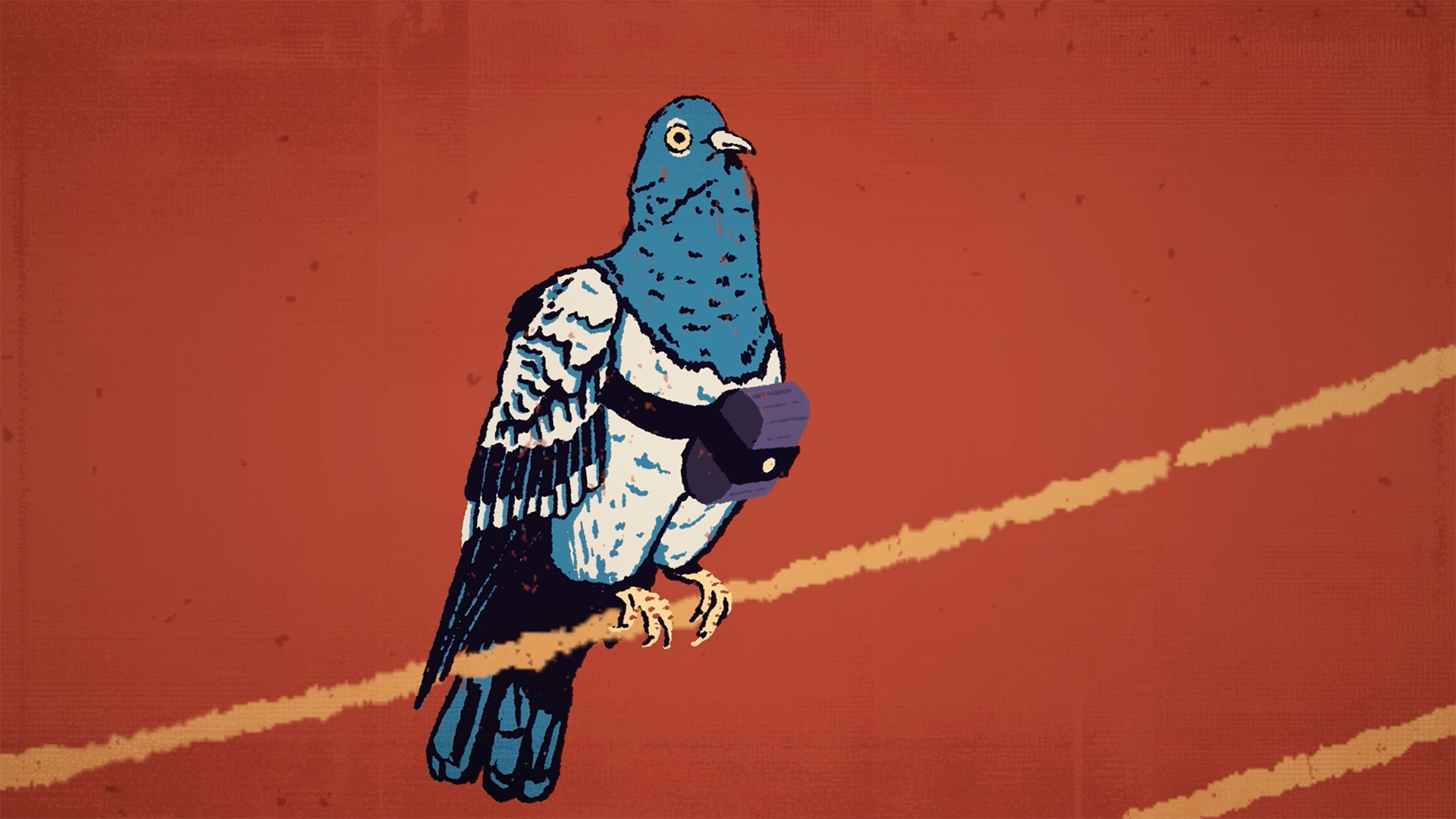
: spies attached cameras to pigeons so they could go and record top-secret areas and projects,
: and then return home with the footage. We know the USA's newly minted Central Intelligence
: Agency, or CIA, also employed other feathered friends, ravens who dropped bugging devices
: on windowsills, or migratory birds who placed sensors detecting chemical weapons. But we
: still don't really know how successful all these bird plans actually were. The results of most of
: these missions are classified. But the CIA didn't just stick to birds. In 1964, they implanted a
: microphone into a cat's ear, thinking it could help monitor conversations in places like public
: parks. They also embedded a small transmitter into the cat's skin and wove an antenna into its
: fur. The CIA called the project Acoustic Kitty, with the cat itself later garnering the nickname
: Acoustikitty. The CIA spent a lot on this project — four years and around twenty million. But, to
: the surprise of no one who's ever met a cat, the project didn't go too well: Acoustikitty refused
: to follow any directions. So in 1967, the project was discontinued, Acoustikitty was never sent
: on any missions. But spies from both sides had better luck with another kind of espionage animal:
: dolphins. Dolphins are smart, capable of diving really deep underwater, and they're also good at
: detecting submerged objects using echolocation. In the US, the Navy used them for everything
: from detecting mines, to delivering weapons, to taking underwater footage, to retrieving bombs, to
: detecting suspicious interlopers in their harbors. The Soviet Union did pretty much the same thing,
: making dolphins and other marine mammals some of the most highly prized animal assistants of
: the Cold War. In the end, the pigeons, dolphins, chimpanzees, and other animals of the
: Cold War helped make incredible contributions to science, technology, and military
: strategy around the world. Ultimately, the Cold War drew to a close when the Soviet Union
: itself collapsed, becoming 15 smaller independent countries across Eastern Europe
: and Central Asia. And while the Cold War didn't always look like other wars we're used to,
: one thing remained the same: it was orchestrated by those with power and fought by those without
: it. From the tiniest space mice to the human beings who died in proxy wars across the globe,
: the conflict had huge costs. So when we think about the Cold War, it's good to remember all the