Cookie Policy

Our website uses cookies to understand content and feature usage to drive site improvements over time. To learn more, review our Terms of Use and Privacy Policy.

OER Logo

Lesson 2.1 Vocab

  • a
  • b
  • c
  • d
  • e
  • f
  • g
  • h
  • i
  • j
  • k
  • l
  • m
  • n
  • o
  • p
  • q
  • r
  • s
  • t
  • u
  • v
  • w
  • x
  • y
  • z
community
Jump To Navigation
Definition

a group of people living close together or having shared experience and identity

Use In A Sentence

The mayor held a public meeting to get opinions from the community concerning the new library.

liberal
Jump To Navigation
Definition

relating to democratic forms of government rather than monarchies or aristocracies; (in a political context) relating to or denoting a political and social philosophy that promotes individual rights, civil liberties, democracy, and free enterprise

Use In A Sentence

The new leader wished to establish a liberal form of government in a country that had never known political freedom.

nationalism
Jump To Navigation
Definition

the idea that citizens of a country are part of something bigger than themselves and that they are loyal to a set of national ideals and practices

Use In A Sentence

A wave of nationalism swept the country after its citizens were attacked.

nation-state
Jump To Navigation
Definition

the modern autonomous (self-governing) nation, considered as a unit of political organization

Use In A Sentence

Albania is a small nation-state of around 3 million people.

revolution
Jump To Navigation
Definition

a drastic and far-reaching change in ways of thinking and behaving

Use In A Sentence

The achievements of the scientific revolution and the technological advances that preceded it were very important.

sovereignty
Jump To Navigation
Definition

the power of self-government, with independence from outside control; autonomy

Use In A Sentence

The nation's military fought valiantly to maintain their country's sovereignty, but ultimately they were no match for their rivals to the north.

Liberal and National Revolutions

Driving Question: How did nationalism and sovereignty reshape the world in the long nineteenth century?

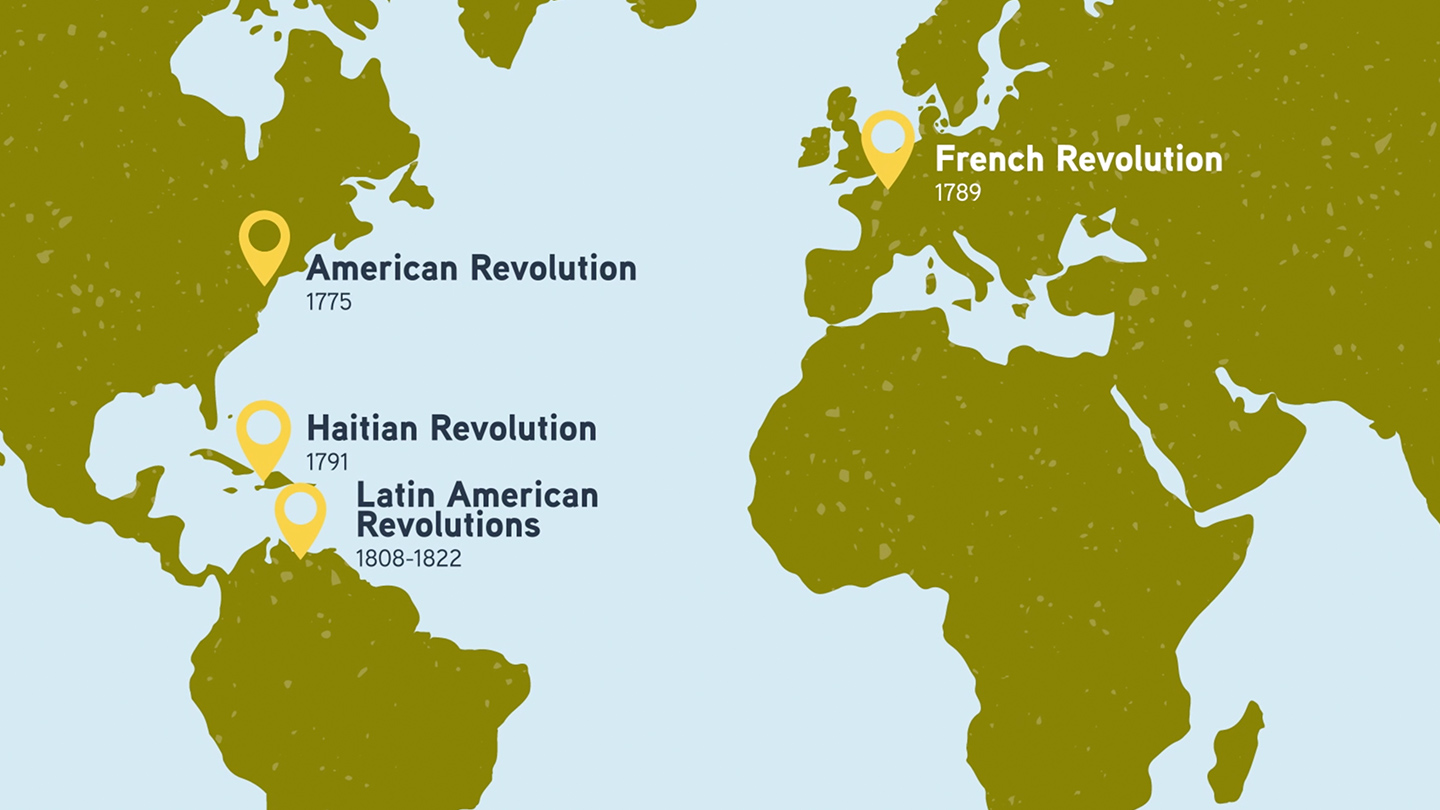
It might seem like nation-states—with flags and laws and borders—have been around forever. But most actually got their start almost 300 years ago. After 1750, revolutions erupted around the world and new forms of government emerged, governments that were based on new ideas about sovereignty and the freedoms people deserve. These revolutions led to the first nation-states.

Learning Objectives:

  1. Learn about new ideas of sovereignty and how these ideas affected communities and nations.
  2. Evaluate how new ideas about sovereignty and individualism impacted communities in the Atlantic world.
  3. Understand the origin and effects of nationalism on human communities and political revolutions.
STEP 1

Opener: Liberal and National Revolutions

As you may have guessed from its title, this unit is all about revolutions. So, what is a revolution? Look at some revolutionary song lyrics to consider the definition.

STEP 2

Looking Ahead

Teaching Tools

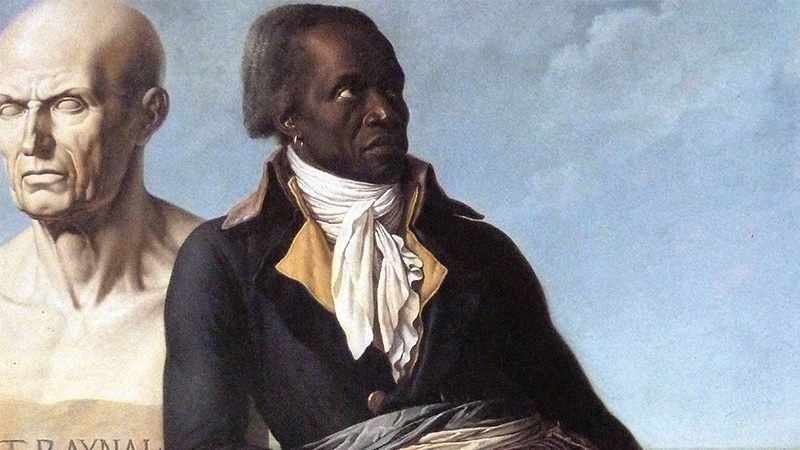
This video uses the unexpected example of Saint-Louis in Senegal as a way to get students thinking about the wide-ranging impacts of the Age of Revolutions. This will get them primed to think about some of the questions they’ll encounter in one of Lesson 2.5’s External link articles: “West Africa in the Age of Revolutions External link .”

Be sure to ask students if they think this period should be called an Age of Revolutions if the impacts and participation were often so uneven.

Agree or disagree? Evaluate some statements before you dive into Unit 2—then see how accurate you were when you get to the end of the unit.
STEP 3

Liberal and National Revolutions

Teaching Tools

Students will notice monumental changes in all the frames throughout this unit, but especially in political communities and the ways that goods were produced. Encourage them to revisit their frame drawing from Unit 1 External link as they think about which frame they think changed the most.

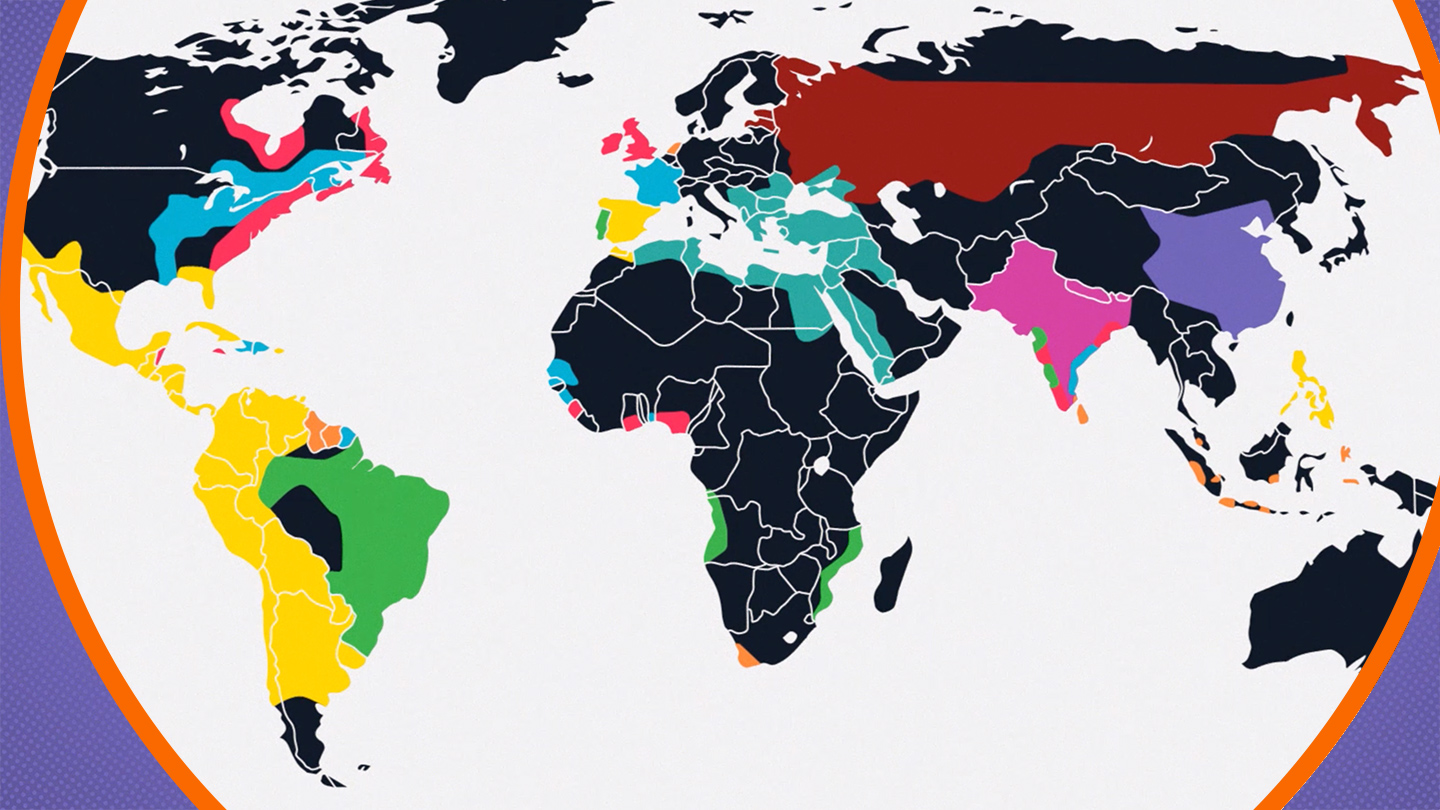
During the long nineteenth century, political revolutions were sparked by new ideas about rights. This video and article will introduce you to some of the causes and effects of these revolutions.

Unit 2 Overview External link

Increasing global connections spread new ideas about sovereignty and rights, and this generated concepts like democracy, human rights, citizenship, and the nation-state.
STEP 4

Framing Unit 2

Teaching Tools

To teach this lesson step, refer to page 5 of the Lesson 2.1 Teaching Guide Locked .

Looking to deepen your understanding of frames? Take a look at this conversation External link in the OER Project Teacher Community.

The frames can help us understand how the world transformed from a world of kings and subjects to a world of nation-states and citizens.

Frames in Unit 2 External link

The nation-state was a new kind of government in which a group of citizens could govern themselves in a particular territory. During the long nineteenth century, this was a radical idea.
STEP 5

Closer: Liberal and National Revolutions

Teaching Tools

Consider prompting your English-learner students to try translanguaging as they break down the meaning of revolution and evolution. That strategy and more ways to support all learners are covered in our Differentiation Guide External link .

Review what you’ve learned in this lesson by considering one of the key words of this unit—revolution.

Extension Materials
Checkmark Alert Banner
Use the activity below as an opportunity to build writing skills based on the material learned in this lesson.
...

Writing Prep: Revolutions

Practice claim writing while reviewing what you’ve learned by building a claim about liberal and national revolutions.