Cookie Policy

Our website uses cookies to understand content and feature usage to drive site improvements over time. To learn more, review our Terms of Use and Privacy Policy.

OER Logo

Lesson 5.1 Vocab

  • a
  • b
  • c
  • d
  • e
  • f
  • g
  • h
  • i
  • j
  • k
  • l
  • m
  • n
  • o
  • p
  • q
  • r
  • s
  • t
  • u
  • v
  • w
  • x
  • y
  • z
citizen
Jump To Navigation
Definition

a person belonging by birth or naturalization to a political and geographic entity, especially a nation

Use In A Sentence

His father emigrated from Russia in 1917 and became a French citizen.

colonialism
Jump To Navigation
Definition

the practice of a foreign government exercising political or economic control of another community

Use In A Sentence

Colonialism imposed European control over most of Africa in the nineteenth century.

empire
Jump To Navigation
Definition

a single political unit, with one supreme ruler, composed of different nations or peoples

Use In A Sentence

The emperor expanded the Russian empire to the east.

imperialism
Jump To Navigation
Definition

the policy of extending the rule or authority of one nation over others by territorial acquisition or through economic or political dominance

Use In A Sentence

The emperor continued on his military rampage in the name of imperialism.

industrialization
Jump To Navigation
Definition

the introduction of industry into a region or country

Use In A Sentence

Industrialization improved the country's economy.

racial superiority
Jump To Navigation
Definition

the discredited idea that there are distinct races of humans, and some are naturally better or more capable than others

Use In A Sentence

Ideas of racial superiority were used to justify violence against enslaved and colonized people.

subject
Jump To Navigation
Definition

a person who owes allegiance to a monarch or to a state

Use In A Sentence

The queen addressed her subjects from the palace that morning.

Imperialism, Colonialism, and Responses

Driving Question: How did imperialism evolve during the nineteenth century?

In the nineteenth century, empires didn’t slow down; they expanded more rapidly and aggressively. Land, labor, and lives were taken in the name of civilization, but opposition from colonized peoples offered a different perspective.

Learning Objectives:

  1. Identify how industrialization led to imperialism and the expansion of empires.
  2. Evaluate how imperialism changed communities, networks, and production and distribution during the nineteenth century.
  3. Utilize close-reading skills to consider how various trends contributed to a new age of imperialism.
STEP 1

Opener: Imperialism, Colonialism, and Responses

Teaching Tools

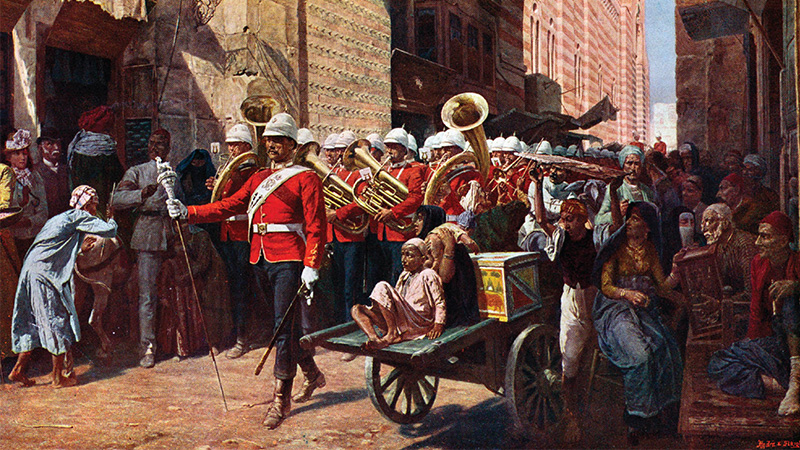
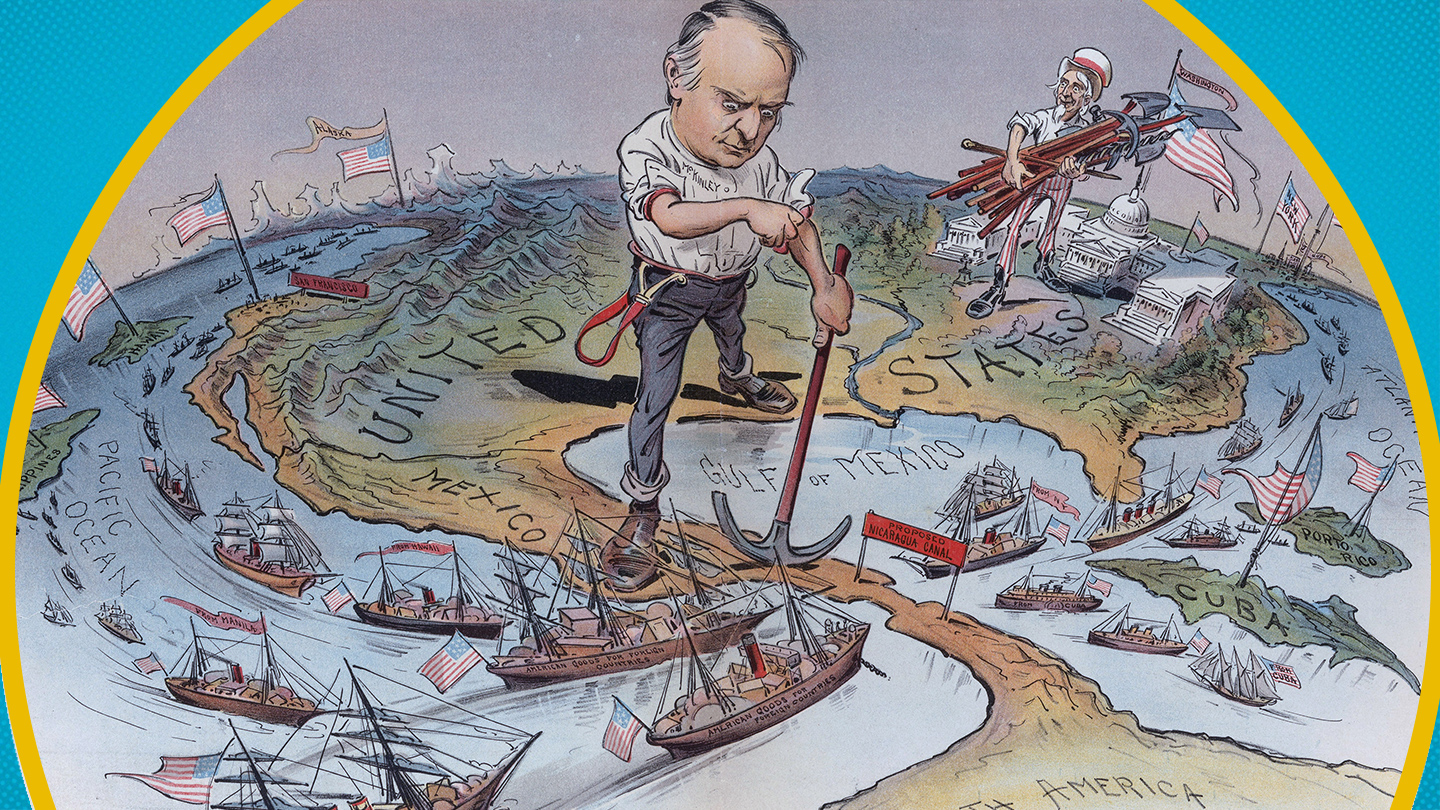
Consider using the Three-Step Reading routine with students to “read” visuals. First, get the big picture. Then, zoom in on details. Finally, think about what the image means. Learn more in our Reading Guide External link . 

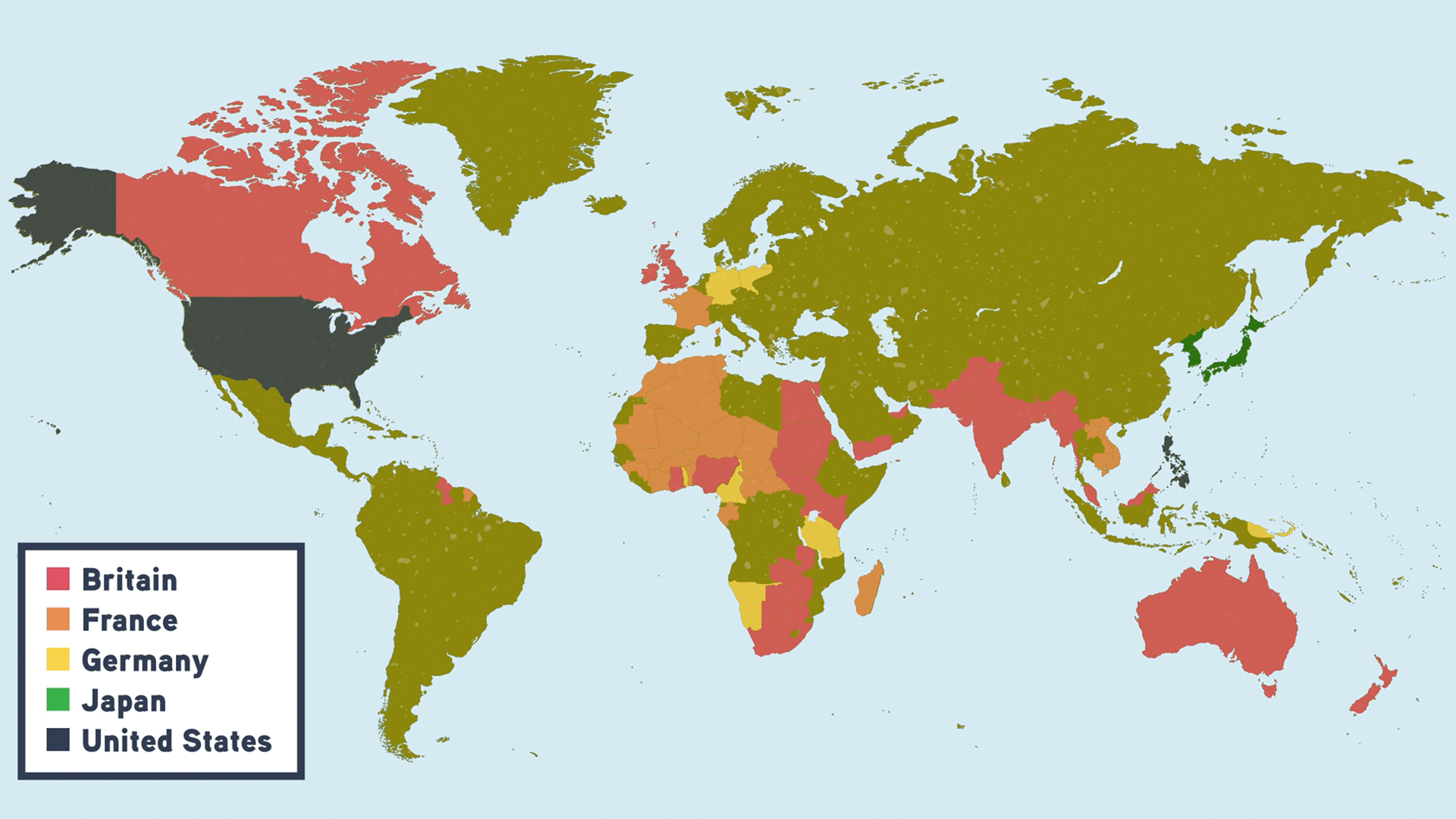
Imperialism shaped the world as it evolved during the nineteenth century. What can comparing images tell you about this big moment in history?

STEP 2

Looking Ahead

In this unit, you’ll explore how imperialism expanded in the nineteenth century. This activity offers a glimpse into those changes—use it to start predicting what’s to come.

STEP 3

Industrial Empires

Teaching Tools

Set the stage: Set context prior to watching a video with students: Why are we watching this video? What do we hope to learn from it? How does the information in this video align with or go against what we have learned in class thus far? Make sure students have enough background knowledge for the video to make sense.

Imperialism expanded in the nineteenth century, but it looked different across regions. Use these materials to start thinking about how power, resistance, and inequality shaped this global era.

Unit 5 Overview External link

Empires were fundamentally unequal. Yet they existed at the same time as sovereignty, free trade, and reforms like abolitionism. How?
STEP 4

Framing Unit 5

Learn how to examine imperialism through the lenses of communities, networks, and production and distribution to better understand how empires shaped and disrupted the world.

Frames in Unit 5 External link

Empires seem to contradict the trends we have seen in the frames so far. Were these contradictions an intended feature of empires, or some kind of glitch in the system?
STEP 5

Closer: Imperialism, Colonialism, and Responses

Now that you know more about imperialism, take another look at the images you examined at the beginning of the lesson.

Extension Materials
Checkmark Alert Banner
Use this post-writing activity to evaluate and improve organization and language/style in an essay—either your own or a student sample.
...

Essay Review: Organization and Language/Style

A great way to improve your writing skill is to evaluate writing samples. In this activity, you’ll evaluate your own writing or a sample essay using the Organization and Language/Style rows of the OER Project Writing Rubric.